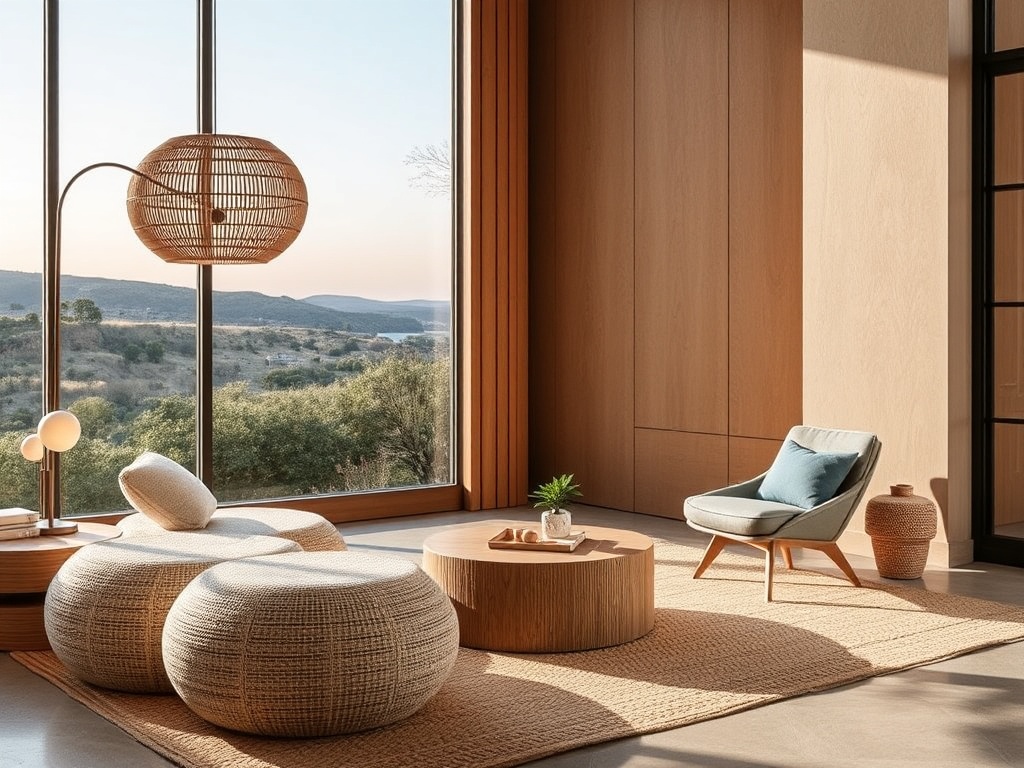
The world of interior design is at a turning point. Gone are the days when “eco-friendly” meant burlap sacks and bland beige. Today, a new generation of designers and homeowners is demanding materials that are as beautiful as they are responsible.
Enter Ottans – a name that is quickly becoming synonymous with sustainable material innovation and conscious interior design.
But what exactly is Ottans? And why are leading architects calling it the most promising bio-material since bamboo? In this post, we’ll explore how Ottans is redefining our relationship with the spaces we inhabit, from carbon footprint to final finish.
What is Ottans? (And Why It Matters)
Ottans is not just a product; it is a platform for regenerative materials. Derived from rapidly renewable agricultural byproducts (such as hemp, flax, and mycelium composites), Ottans transforms waste streams into high-performance surfaces.
Unlike conventional materials like MDF, plastic laminates, or virgin hardwood, Ottans is:
-
Carbon-negative – It sequesters more CO2 than it emits during production.
-
Circular by design – At the end of its life, it can be composted or upcycled.
-
Toxin-free – No VOCs, formaldehyde, or microplastics.
In short, Ottans answers the single most important question facing modern design: How do we create luxury without destroying the planet?
The 3 Pillars of Ottans Materials
To understand the future, we need to look at the science. Ottans is built on three non-negotiable pillars.
1. Bio-Based & Abundant
Ottans sources fibers from agricultural waste – think hemp stalks left after seed harvest, or flax shives from linen production. These plants grow in 90–120 days, require minimal water, and regenerate soil health. No trees are cut. No fossil fuels are melted.
2. High Performance (Stronger Than Oak)
Here is where Ottans shatters stereotypes. Independent testing shows that Ottans composites have a higher impact resistance and dimensional stability than traditional hardwood. It resists moisture, doesn’t warp, and can be CNC-machined, sanded, and finished like premium timber.
3. Aesthetic Versatility
Conscious design should never compromise on beauty. Ottans materials come in:
-
Deep, organic textures (reminiscent of raw linen or travertine)
-
Earthy, neutral palettes (from flax beige to charcoal hemp)
-
Customizable finishes (matte, polished, or hand-oiled)
Whether your project is Japandi minimalism, brutalist warmth, or biophilic modernism, Ottans adapts.
Conscious Interior Design – Beyond Greenwashing
Let’s be honest: the term “sustainable design” has been overused. Many brands slap a green leaf on a petroleum-based product and call it eco.
Conscious interior design is different. It requires:
-
Transparency – Knowing exactly where every material comes from.
-
Durability – Creating pieces that last decades, not seasons.
-
End-of-life strategy – Designing for disassembly or return to earth.
Ottans delivers on all three. When you specify Ottans for a kitchen island, a feature wall, or custom furniture, you are not just avoiding harm – you are actively restoring ecological balance.
5 Ways to Use Ottans in Your Next Project
Ready to integrate Ottans into your home or studio? Here are five high-impact applications:
-
Statement Wall Cladding – Replace drywall or plastic panels with Ottans’ textured sheets for instant depth.
-
Kitchen Countertops – Unlike quartz (mining-intensive) or laminate (plastic), Ottans offers a warm, durable, and repairable surface.
-
Custom Shelving & Cabinetry – Lightweight yet strong, Ottans is ideal for floating shelves and modular storage.
-
Acoustic Panels – The natural fiber structure absorbs sound, improving room acoustics without foam.
-
Furniture Design – From dining tables to headboards, Ottans brings a tactile, natural finish.
Ottans vs. Traditional Materials – A Quick Comparison
| Feature | Ottans | Hardwood | Plastic Laminate | Concrete |
|---|---|---|---|---|
| Renewable | ✅ (90-day cycle) | ❌ (Decades to grow) | ❌ | ❌ |
| Carbon Impact | Negative | Positive (logging + transport) | High | Very High |
| Toxins | Zero VOCs | Depends on finish | Formaldehyde risk | High embedded carbon |
| Aesthetic warmth | High | High | Low | Medium |
| Repairable | Yes (sand & oil) | Yes | No | Difficult |
The verdict is clear: Ottans offers a superior balance of ecology and performance.
The Future is Regenerative
We are witnessing a paradigm shift. The next decade will belong to materials that give back more than they take. Ottans is already partnering with circular economy pioneers, biophilic design firms, and carbon-neutral builders to scale this vision.
Imagine a home where every surface – your table, your wall, your ceiling – actively stores carbon. Where the material palette smells of earth and linen, not chemicals. Where your design choices help cool the planet.
That future is not 10 years away. It is Ottans. And it is available now.
Final Thought – Design Like You Give a Damn
As an interior designer, architect, or homeowner, you hold immense power. Every material choice is a vote for the kind of world you want to live in.
Choosing Ottans means choosing:
-
No deforestation
-
No petrochemicals
-
No landfill waste
It means choosing beauty that has a conscience.
Frequently Asked Questions About Ottans
Get answers to the most common questions about Ottans’ sustainable materials, performance, pricing, and care.
1. What exactly is Ottans made from?
Ottans manufactures its materials from rapidly renewable agricultural byproducts – primarily hemp shives, flax fibers, and mycelium (mushroom root structure). Farmers would otherwise burn or landfill these materials. It bonds them using non-toxic, bio-based binders (no formaldehyde, no epoxy, no plastic).
Key takeaway: Ottans is 95%+ agricultural waste + 5% natural binder. No trees. No oil.
2. Is Ottans really carbon-negative? How does that work?
Yes, third-party life-cycle assessments (LCAs) confirm that it is carbon-negative.
Here’s the simple math:
-
Growing hemp/flax pulls CO2 from the atmosphere (sequestration).
-
Manufacturing uses low-energy, water-based processes.
-
Total sequestered carbon > total emitted carbon.
Each square meter of it stores roughly 2.5 kg of CO2 – equivalent to what a mature tree absorbs in 3 months.
3. How strong and durable is Ottans? Can I use it in a kitchen or bathroom?
Absolutely, it has been independently tested for:
| Property | Performance |
|---|---|
| Hardness (Janka) | 1,400+ lbf (comparable to white oak) |
| Moisture resistance | Low swelling rate (<3% after 24h soak) |
| Impact resistance | Passes commercial flooring standards |
For kitchens, we recommend a natural oil or wax sealant (included in finishing). For high-humidity bathrooms, a water-resistant top coat is available. Unlike MDF, it will not delaminate or harbor mold.
Warning: Do not leave standing water for 24+ hours. Like any natural material, wipe spills promptly.
4. Is Ottans expensive compared to traditional materials?
Pricing is competitive with mid-to-high range natural materials:
| Material | Relative cost per sq ft |
|---|---|
| Plastic laminate | $ |
| MDF / particleboard | $ |
| Ottans | $$ |
| Solid hardwood (walnut/oak) | $$$ |
| Quartz / marble | $$$$ |
Value proposition: It offers hardwood-level beauty and durability at a lower price point, plus you eliminate the hidden costs of VOC off-gassing, carbon offsets, or future disposal fees.
Pro tip: Request bulk pricing for commercial projects (hotels, offices, multi-unit residential).
5. How do I clean and maintain Ottans surfaces?
Very simple. Treat it like a premium natural material:
Daily cleaning:
-
Soft cloth + mild soap (Castile or dish soap) + water.
-
Avoid bleach, ammonia, or abrasive pads.
Deep maintenance (every 6–12 months):
-
For unsealed surfaces: Light sanding + apply hemp oil or beeswax.
-
For sealed surfaces: Wipe with a damp cloth only.
Repairing scratches:
-
Light sanding (220 grit) restores the original finish. No special tools needed.
6. Is Ottans fire-resistant?
Yes, it meets or exceeds ASTM E84 Class A / Class B fire ratings for wall and surface materials, depending on the finish.
-
Raw / oiled Ottans: Class B (slow flame spread)
-
With mineral-based top coat: Class A (same as gypsum drywall)
Always consult your local building code. For commercial applications, we provide official test reports upon request.
7. Can Ottans be recycled or composted at end of life?
Yes – and this is where it truly shines.
-
Composting: Unsealed or oiled it can be cut into small pieces and composted in an industrial facility (breaks down in 90–120 days).
-
Upcycling: Sealed panels can be sanded down and re-pressed into new sheets (closed-loop recycling).
-
Landfill alternative: Even if landfilled, it is inert and non-toxic – unlike plastic laminates that persist for centuries.
Our promise: We are developing a take-back program. Email us for details on returning large volumes.
8. Does Ottans off-gas or smell?
No. it contains zero VOCs (volatile organic compounds), zero formaldehyde, and zero phthalates.
What you will smell: A faint, earthy scent of hemp and flax when freshly cut – similar to fresh linen or hay. That scent dissipates within 24–48 hours and is completely non-toxic.
Certification: it is GREENGUARD Gold certified for use in schools, hospitals, and nurseries.
9. Can I use Ottans outdoors?
For covered outdoor areas (porches, eaves, shaded patios) – yes, with a UV-stable, water-resistant top coat.
For direct sun/rain (decks, fences, garden furniture) – not recommended. It is an interior-first material. We recommend our sister product line for exterior applications (contact support).
10. What colors and finishes are available?
The Ottans palette is inspired by nature – soft, warm, and timeless.
| Collection | Colors | Texture |
|---|---|---|
| Flax | Natural beige, oatmeal, sand | Fine linen weave |
| Hemp | Charcoal, slate, warm grey | Raw, fibrous, tactile |
| Mycelium | Cream, mushroom brown, terracotta | Velvety, matte |
| Custom | Bespoke pigments available for 100+ sqm orders | Smooth, brushed, or ribbed |
Finishes: Raw (unsealed), hand-oiled, hard wax, or water-based matte sealer.
11. How do I order samples or purchase Ottans?
1st Step : Request a sample kit – includes 4”×4” swatches of all standard colors plus finish options.
2nd Step : For small projects (under 50 sq ft), purchase directly from our online shop.
3rd Step : For trade (architects, designers, builders), apply for a trade account to access bulk pricing, CAD files, and technical support.
👉 [Link to sample request form]
👉 [Link to shop]
👉 [Link to trade application]
12. Where is Ottans manufactured?
It is produced in regional micro-factories located within 300 miles of the agricultural source. Current production hubs:
-
North America: Ontario, Canada (hemp from Midwest farms)
-
Europe: Normandy, France (flax from local cooperatives)
This distributed model reduces transport emissions and supports local farming communities.
13. Can I use Ottans with underfloor heating?
Yes, with one condition: Use the thin-profile Ottans (6mm or 9mm) and maintain surface temperature below 85°F (29°C). It has natural insulating properties, so it may feel slightly less responsive than tile or stone, but it is perfectly safe and will not crack or warp.
14. Is Ottans pet-friendly?
Very much so. Ottans is:
-
Non-toxic – Safe if your dog or cat chews a corner (though we don’t recommend it).
-
Scratch-resistant – The natural fiber structure hides light scratches better than smooth finishes like lacquer or vinyl.
-
Easy to clean – Pet hair doesn’t stick like it does to carpet or upholstery.
For homes with large dogs, we recommend the hand-oiled finish – scratches can be buffed out easily.
15. I’m a designer. Do you offer CEU courses or spec sheets?
Yes. We provide:
-
AIA-approved CEU course: “Carbon-Negative Materials for Interior Design” (1 LU)
-
Technical specification sheets (CSI 3-part format)
-
BIM objects (Revit families)
-
Sample library program for design firms
👉 Email specs@ottans.com with your firm name to request access.