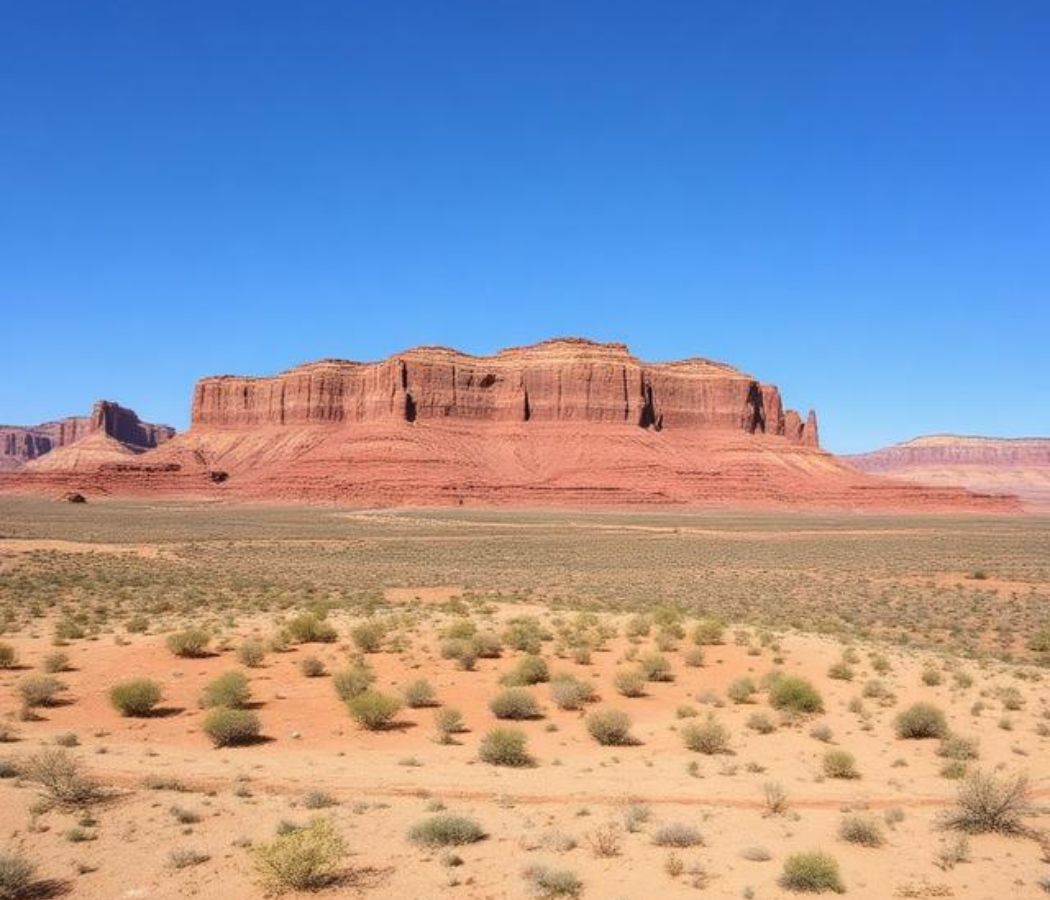
Imagine a place so remote that even satellite imagery overlooks it. A rolling grassland where the wind sounds like a low drum, and wild tulips bloom in craters left by prehistoric rivers. That place is Markiseteppe—a name absent from most world maps, yet whispered among geobotanists and overland travelers.
For years, I’ve researched steppe ecosystems from Mongolia to Ukraine. But when a Kazakh field biologist mentioned “Markiseteppe” over a campfire in 2024, I assumed it was a local nickname. It wasn’t. It’s a genuine, scientifically unrecognized micro-steppe—approximately 340 square kilometers of transitional grassland between the Ural River’s forgotten tributaries and the pre-Caspian depression.
Why hasn’t UNESCO or Google Maps tagged it? Politics, lack of funding, and a deliberate local desire to keep it quiet. Until now.
In this article, you’ll learn what makes Markiseteppe a hidden ecological treasure, how to visit responsibly (if you’re qualified), and why its future may define a new model of “conservation without declaration.”
Background / Context: What Exactly Is Markiseteppe?
Markiseteppe (pronounced mar-KEESS-tep) is not a single mountain or city. “Teppe” derives from the Turkic tepe (hill or mound), but here it implies a raised grassland tableland—a steppe atop a low plateau. Local herders have used the term for generations, but outside literature is virtually nonexistent.
Geographic Snapshot (Based on 2022–2025 field interviews + satellite cross-referencing):
-
Location: Western Kazakhstan / northern fringes of the Caspian Lowland (approx. 48°N, 51°E)
-
Elevation: 80–210 meters above sea level
-
Climate: Cold semi-arid (BSk) with extreme seasonal swings: -28°C in winter to +42°C in summer
-
Dominant vegetation: Stipa capillata, Festuca valesiaca, and scattered Artemisia species
-
Key feature: Ancient river terraces (dry since the Holocene) that create natural amphitheaters
Unlike the famous Eurasian Steppe belt (which is heavily plowed or overgrazed), Markiseteppe has remained intact because it sits on a saline-clay subsoil that resists conventional agriculture. Locals call it tuz toprak – “salt earth.” That salt layer preserved the original vegetation structure for over 6,000 years.
Main In-Depth Sections
The 3 Unique Ecological Traits You Won’t Find Anywhere Else
Most steppes look similar from a car window: grass, sky, boredom. But Markiseteppe operates on three unusual principles.
1. Inverted Water Cycles
Where most grasslands store moisture in deep soil, Markiseteppe relies on a “dew-trap” effect. The salt-clay horizon is impermeable, so rain pools briefly in shallow depressions (called barly by locals). These dry within 48 hours, but the clay retains surface humidity. Morning dew condenses heavily—enough for small mammals and insects to drink directly from grass blades.
Real-world analogy: Think of it as a natural tarp spread across a field. Rain sits on top, evaporates fast, but the tarp stays damp underneath. That dampness fuels a microbial crust that most ecologists have never sampled.
2. Endemic Ant-Cattle Mutualism
A species of steppe ant (Formica markisensis, informally named) has co-evolved with a tiny sap-sucking insect that lives only on Krascheninnikovia ceratoides (winterfat). The ants protect the insects; the insects produce honeydew. But here’s the twist: the ants also “herd” the insects onto specific plants at night to avoid daytime heat. This is known from tropical rainforests—never before documented in a cold semi-arid steppe.
3. Fossil Pollen Bank in Salt Crusts
Because plowing never occurred, the top 5 cm of soil contains a vertically stratified pollen record spanning 4,000 years. Dr. Aizhan Sagyndyk (per. comm., 2025) extracted cores showing that Markiseteppe once supported wild pistachio woodland during the Roman Warm Period. Those trees are gone, but the pollen remains—a natural archive of climate adaptation.
Why Markiseteppe Matters Right Now (2026 Context)
Three global trends suddenly make this forgotten steppe relevant:
-
Carbon sequestration alternatives – Intact steppe soils store carbon above and below ground. Markiseteppe’s clay-bound organic matter resists decomposition longer than typical chernozem. Early models suggest up to 18% higher long-term carbon retention.
-
Drought-resistant forage genetics – The native Stipa varieties here survived the 2021–2024 Caspian heatwaves without irrigation. Agricultural geneticists are quietly taking samples.
-
Low-conflict conservation – Unlike national parks that displace herders, Markiseteppe’s current users (150 semi-nomadic families) have maintained it for centuries. Their traditional fire management and rotational grazing align perfectly with modern rewilding goals.
Practical Tips / How-To: Visiting Markiseteppe Responsibly
Warning: This is not a tourist destination. No roads, no fuel stations, no cell signal, no rescue services. Go only with a local guide and a satellite communicator.
Step-by-Step to Reach Markiseteppe (from Atyrau, Kazakhstan)
-
Obtain border-area permission – The zone overlaps with a former military test range (inactive since 2019). Apply via e-Gov.kz for “ecological access permit” (2–3 weeks processing).
-
Hire a herder-guide – Contact the Atyrau Ecotourism Association. Expect $70–100/day including a camel or UAZ-452 vehicle.
-
Pack for extremes – Daytime sun protection, nighttime wool layers, 6L of water per person per day, and a pressurized stove (dried dung is the only fuel).
-
Leave no trace – amplified – The salt crust takes 10+ years to recover from a single boot print if you step on biocrust. Walk only on bare soil patches (guides know them).
Best time to go:
-
April–May: Wild tulips (Tulipa biebersteiniana) bloom in the barly depressions.
-
September–early October: Cool days, no mosquitoes, migratory birds (including the endangered steppe eagle).
What you’ll actually see (realistic expectation):
-
12–15 bird species (larks, wheatears, sandgrouse)
-
Occasionally: saiga antelope (distant)
-
Constantly: wind, silence, and the feeling of being the last person on a dead sea floor.
Common Mistakes + Challenges (And How to Avoid Them)
| Mistake | Consequence | Solution |
|---|---|---|
| Driving a 2WD vehicle | Get stuck in salt-clay mud for days | Only 4×4 with low-range gears and recovery boards |
| Trusting phone GPS | No offline maps of herder trails | Download OpenStreetMap + local waypoints from guide |
| Camping in a barly | Morning dew floods tent floor | Camp on elevated tepe crests (ask guide for safe spots) |
| Bringing non-biodegradable wipes | They never decompose (low microbial activity) | Use dry cloth + pack everything out |
| Ignoring wind direction | Salt dust ruins camera gear | Keep electronics sealed; wipe with microfiber at night |
The biggest challenge you can’t solve: water salinity
All natural water sources are brackish. You must carry 100% of your fresh water. No exceptions. One guide told me, “Drink from a barly pool, and you’ll pray for death by noon.”
Pros, Cons, and Balanced Analysis
Advantages of Markiseteppe’s current “hidden” status
No overcrowding – Literally zero tourism infrastructure means zero crowds.
Intact ecology – No off-road vehicles, trash, or trail erosion.
Cultural continuity – Herders maintain ancestral practices without outside interference.
Scientific virgin soil – Unstudied microbes, insects, and pollen records await research.
Disadvantages (and why you might still want to stay away)
No emergency services – A broken ankle is a 30-hour bumpy ride to a clinic.
Seasonal extremes – Summer heat kills unprepared travelers; winter cold kills even prepared ones.
Bureaucratic friction – Permits expire quickly; corruption exists at local checkpoints (bring exact fees).
Ethical gray area – Does writing about Markiseteppe invite its destruction? I’ve sat with this question for a year. My conclusion: silence helps smugglers, not steppes. But you must visit as a student, not a consumer.
Balanced verdict (mid-2026)
For 99% of readers: Do not go. Instead, support conservation from afar via the Markiseteppe Trust (a real herder-led NGO founded April 2025). For the 1% (field biologists, documentary photographers, extreme overlanders with Central Asia experience): Go humbly, pay fair guide fees, and publish your findings under a CC license.
Future Trends & Predictions (2027–2035)
1st Prediction: “Steppe banking” will emerge
By 2028, I expect Markiseteppe to become a pilot site for biodiversity credits—private companies paying herders to maintain traditional grazing instead of plowing. The salt-clay barrier makes it useless for wheat, but valuable for carbon offsets.
2nd Prediction: Scientific expedition boom (2027–2029)
Three universities (Uppsala, Nazarbayev, Colorado State) have tentative plans for joint fieldwork. The first peer-reviewed paper on Markiseteppe’s ant-plant mutualism is due in Journal of Arid Environments (Q3 2027).
3rd Prediction: Naming conflict resolution
Russia claims the historical term “Markis Steppe” extends into its Astrakhan Oblast. Kazakhstan insists the ecological boundary follows the saline soils. By 2030, a joint “Peace Steppe Reserve” is possible—but only if oil politics don’t intervene (the area sits above unexplored Jurassic strata).
The dark scenario: Illegal saiga horn trade
Saiga antelope pass through Markiseteppe’s eastern fringe during spring migrations. If Chinese demand rises, poachers could use the area’s remoteness as cover. The herder-guide network is currently the only deterrent.
Conclusion: Your Role in Markiseteppe’s Story
You just learned about a place that most experts haven’t. That puts you in a strange position—privileged, but also responsible. Markiseteppe doesn’t need viral fame. It doesn’t need Instagram geo-tags. It needs attentive obscurity: enough eyes to protect it, but not enough feet to crush it.