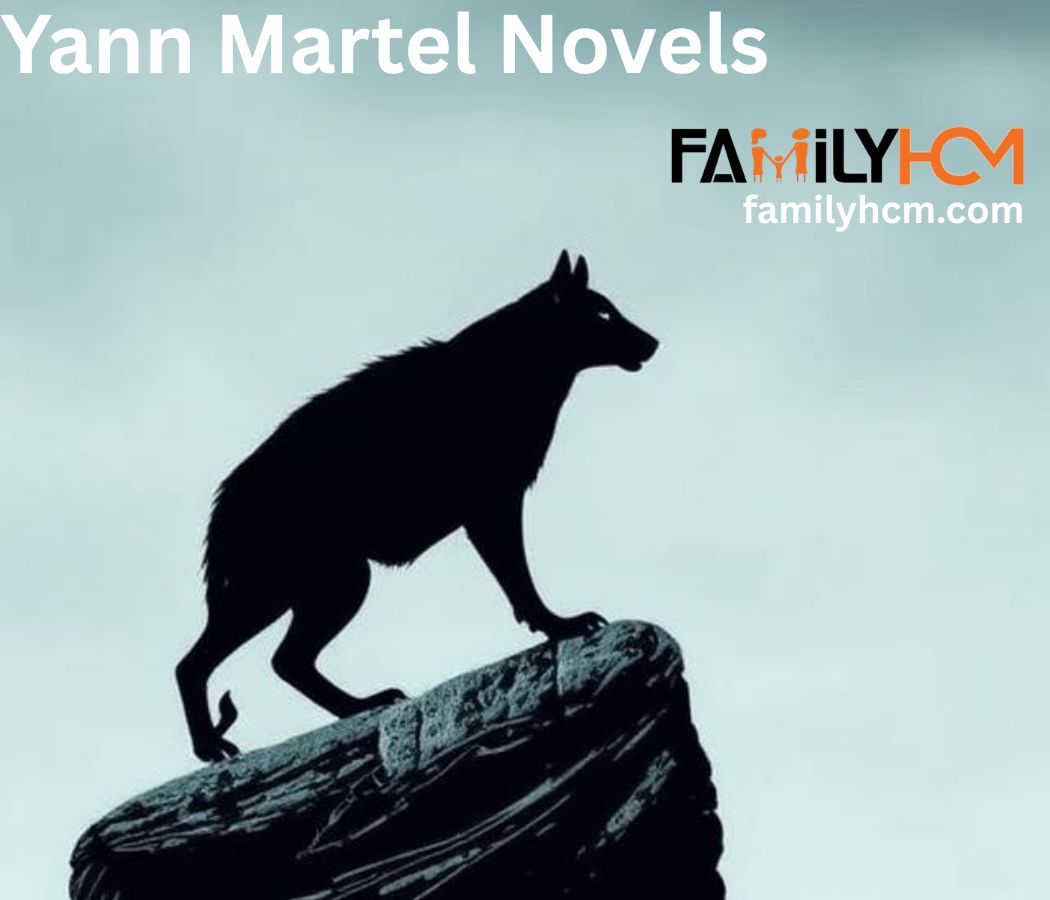
Yann Martel Novels: Tiger, Taxidermy & Troy

Yann Martel Novels

 Welcome back to the blog. Before we begin, I want to start by asking a question that has haunted me for years: What would you do if you had to survive 227 days alone in the Pacific Ocean alongside a fully grown, hungry Bengal tiger?

That is the premise that has captivated over 15 million readers worldwide. If you’re a fan of literature that makes you question the very nature of reality, love stories that blend the mundane with the miraculous, or simply want to broaden your reading list beyond standard plotlines, you have come to the right place.

Today, we are diving deep—beyond the tiger and the boat—to explore the entire body of work of the Man Booker Prize-winning author, Yann Martel. We’ve been doing the reading so you don’t have to, looking at his unique themes, his new work, and why his books are essential for readers who love to think.

The Man Behind the Magic (Who Happens to Love Apes)

Born in Spain in 1963 to Canadian parents in the foreign service, Yann Martel didn’t just sit in a library to learn about the world: he lived in it. He grew up everywhere from Alaska and Costa Rica to Paris, Madrid, and Mexico City before landing in Canada to study Philosophy at Trent University.

Before hitting the bestseller lists, Martel was a modern-day literary nomad. He worked as a tree planter, a dishwasher, and a security guard. That nomadic, philosophical edge is the engine of his writing.

The Masterpiece: “Life of Pi” (2001)

We have to start with the elephant—or rather, the impressive tiger—in the room.
Life of Pi follows Piscine Molitor “Pi” Patel, a young Indian zookeeper’s son who is shipwrecked in the Pacific. His only companion? A 450-pound Royal Bengal tiger named Richard Parker.

When Life of Pi won the 2002 Man Booker Prize, it wasn’t just a victory for Martel; it was a global phenomenon published in over 50 territories. The 2012 Ang Lee film won an Academy Award, cementing the story in pop culture.

But the book is so much more than a survival story. It is a metaphysical puzzle box:

  • Faith vs. Reason: Pi is simultaneously a practicing Muslim, Christian, and Hindu. Martel asks: why must we choose one story when multiple can provide meaning?

  • The Nature of Truth: At the novel’s end, Martel forces you to choose which version of the story you want to believe. He famously wrote, “If you stumble at mere believability, what are you living for?”

  • The Primacy of Survival: It explores how far the human psyche stretches—and breaks—when pushed to its absolute limits.

The Rest of the Canon: From Grief to Taxidermy

While he will always be “the Life of Pi guy,” reducing Martel to that single novel is a massive disservice. His other works are experimental, sometimes brutal, and always intelligent.

The Early Experiments (1993–1996)

His first book was actually a short story collection, The Facts Behind the Helsinki Roccamatios, followed by his debut novel Self (1996). In Self, Martel wrote a fictional autobiography where the narrator physically changes gender halfway through the book. It is raw, sometimes graphic, and an exhilarating exploration of identity and national belonging.

The Dark Turn: “Beatrice and Virgil” (2010)

Following the massive success of Pi, Martel attempted to write a small, absurdist play about the Holocaust starring a donkey and a monkey. His publishers rejected it. So, he wrote a novel about that rejection. The result is Beatrice and Virgil.

The book features a novelist (Henry) who meets a taxidermist who has written a play about two stuffed animals—a donkey named Beatrice and a monkey named Virgil—suffering through “The Horrors”. It is incredibly divisive. Some call it a brilliant, “poignant, heartbreaking” allegory for how we fail to truly represent history, while others found it pretentious and “botched”. Love it or hate it, it is a fascinating study of literary ambition.

The Return to Form: “The High Mountains of Portugal” (2016)

Fifteen years after Pi, Martel returned to whimsical magical realism with The High Mountains of Portugal. It is three interconnected novellas spanning the 20th century, slowly zooming in on the themes of grief and loss.

In one timeline, a man walks backwards for a continent to grieve his dead lover. In another timeline—set decades later—a grieving Canadian senator arrives in Portugal with a chimpanzee in the passenger seat of his car. It is a story about how we carry loss inside us and how, sometimes, we need an ape to help us let go.

The Signature Tools of the Trade

Why do Martel’s books feel so different from anything else on the shelf? He has a distinct toolbox that he pulls out every time.

  1. The Animal Metaphor: Martel doesn’t write about animals just because they cute. “Animals are the product of the materialization of Yann Martel’s thinking process,” one critic notes; he uses them to discuss the absurdity of human ideology, from imperialism to genocide.

  2. Metafiction: Almost all his books are “stories about stories.” Life of Pi is a writer interviewing a man. Beatrice and Virgil is about a writer failing to write. His new novel plays with footnotes as a literary device.

  3. Global Nomadism: Having grown up in a dozen countries, his settings are never predictable: India, Portugal, ancient Greece, a lifeboat in the middle of nowhere.

  4.  Philosophy Light: He studied philosophy at university because he found it “exhilarating” to discuss concepts like justice, beauty, and being. He writes plot-driven books that just happen to ask, “What is the meaning of being alive?”

The Latest Epic: “Son of Nobody” (March 31, 2026)

If you are looking for a reason to pick up a Yann Martel novel today, look no further. As of last week (the book dropped on March 31, 2026), Martel has released Son of Nobody.

In this new release, Martel takes on the Trojan War rather than the high seas. The novel follows Harlow Donne, a modern-day Canadian classicist who discovers a pottery shard that contains a lost epic poem from the Bronze Age.

This is Martel doing what Martel does best: the dual-narrative deep dive. He cuts between the existential crisis of a lonely Oxford professor losing his family, and the brutal realities of a forgotten foot soldier trudging through the Trojan War.

  • Why you should read it: After The High Mountains of Portugal, this feels like Martel returning to his Life of Pi era. It is a stunning meditation on legacy, history, and the “relationship between the ancient and contemporary worlds”. Early reviews are calling it a “stunningly imagined revisitation of an ancient past”.

Final Page: Is Yann Martel For You?

So, who is Yann Martel for? He is for the reader who likes a little struggle in their fiction. He does not spoon-feed answers, he gives you a premise (a tiger in a boat, a chimpanzee in a car, a donkey in a death camp) and asks, “Now, what do you make of that?”

If you want fast-paced thrillers, move along. If you want poetic, philosophical, surrealist journeys that linger in your brain for a decade, he is your author.

Frequently Asked Questions (FAQs) About Yann Martel Novels

Here are detailed answers to the most common questions readers have about Yann Martel’s life, works, and literary style.

1. What is Yann Martel’s most famous novel?

Answer: Life of Pi (2001) is by far his most famous work. It won the prestigious Man Booker Prize in 2002, sold over 15 million copies worldwide, and was adapted into an Academy Award–winning film directed by Ang Lee in 2012. The story of a teenage boy stranded on a lifeboat with a Bengal tiger has become a modern classic, studied in schools and discussed in book clubs across the globe.

2. In what order should I read Yann Martel’s novels?

Answer: While you can read them in any order, here are three recommended approaches:

  • By publication date (to see his evolution as a writer):

    1. The Facts Behind the Helsinki Roccamatios (1993 – short stories)

    2. Self (1996)

    3. Life of Pi (2001)

    4. Beatrice and Virgil (2010)

    5. The High Mountains of Portugal (2016)

    6. Son of Nobody (2026)

  • For newcomers (start accessible, then dive deeper):

    1. Life of Pi (the masterpiece)

    2. The High Mountains of Portugal (whimsical, three-part structure)

    3. Son of Nobody (his latest, great for mythology fans)

  • For literary adventurers (embrace the weirdness):

    1. Self (gender-swapping narrator)

    2. Beatrice and Virgil (Holocaust allegory with taxidermy animals)

    3. The Facts Behind the Helsinki Roccamatios (experimental shorts)

3. Is Life of Pi based on a true story?

Answer: No, Life of Pi is a work of fiction. However, Martel drew inspiration from several real sources: a Brazilian book called The Maxims of Ptahhotep (about a shipwreck), historical accounts of shipwrecks, and extensive research on zoology and tiger behavior. The novel’s genius lies in its ambiguity—Martel intentionally leaves it up to the reader to decide whether Pi’s story with the animals is “true” or a metaphorical retelling of a more brutal human survival story.

4. Why does Yann Martel use animals so often in his novels?

Answer: Animals serve as powerful metaphors in Martel’s work. He has explained that animals “strip away the clutter of human ideology” and force readers to confront raw emotion, survival instincts, and moral questions without the baggage of cultural or political labels. For example:

  • Richard Parker (tiger) in Life of Pi represents fear, the will to live, and the primal self.

  • Beatrice (donkey) and Virgil (monkey) in Beatrice and Virgil represent innocent victims of genocide.

  • A chimpanzee named Odo in The High Mountains of Portugal represents grief, companionship, and our evolutionary connection to the natural world.

Martel studied philosophy, and animals help him stage philosophical thought experiments in a vivid, accessible way.

5. Is Beatrice and Virgil as difficult as people say?

Answer: Yes and no. Beatrice and Virgil is widely considered Martel’s most challenging and divisive novel. It is a short book (around 200 pages), but its subject matter—the Holocaust represented through talking stuffed animals—is heavy, allegorical, and deliberately unsettling. Many readers and critics found it brilliant and heartbreaking. Others called it “pretentious,” “grating,” or even “botched.” Our advice: read it only if you enjoyed the philosophical, meta-fictional aspects of Life of Pi and are prepared for a dark, non-linear narrative that demands interpretation rather than passive reading.

6. What is Son of Nobody (2026) about?

Answer: Son of Nobody is Martel’s latest novel, released on March 31, 2026. It follows Harlow Donne, a modern Canadian classicist who discovers a pottery shard containing a lost epic poem from the Bronze Age. The novel alternates between two timelines:

  • Present day: Harlow’s existential crisis as he struggles with the collapse of his family and his academic career.

  • Bronze Age: The brutal, poetic journey of an anonymous foot soldier during the Trojan War.

The book explores themes of legacy, memory, the relationship between ancient and modern worlds, and how forgotten voices shape history. Early reviews praise it as a return to the ambitious, philosophical storytelling of Life of Pi.

7. Does Yann Martel write fast-paced thrillers?

Answer: No. Martel’s novels are literary, philosophical, and often slow-burning. He prioritizes ideas, metaphors, and character introspection over plot twists or action sequences. If you enjoy page-turning suspense, his work may frustrate you. But if you love novels that linger in your mind for years—novels that ask big questions about faith, truth, suffering, and storytelling itself—Martel is an excellent choice.

8. Has Yann Martel won any major literary awards?

Answer: Yes, the most significant is the Man Booker Prize (now called the Booker Prize) for Life of Pi in 2002. He has also received:

  • The Hugh MacLennan Prize for Fiction (for Life of Pi)

  • The Asian/Pacific American Award for Literature

  • Nominations for the Governor General’s Award and the Giller Prize (Canada’s top literary honors)

His other novels have not won major awards, but they have been widely reviewed and debated.

9. Are Yann Martel’s novels connected to each other?

Answer: No direct shared characters or universes. However, they share recurring thematic DNA:

  • The relationship between humans and animals (every novel)

  • Metafiction—stories within stories (especially Life of PiBeatrice and VirgilSon of Nobody)

  • Grief and loss as transformative forces (The High Mountains of PortugalSon of Nobody)

  • The unreliability of memory and narrative (SelfLife of Pi)

  • Travel and cultural displacement (Martel’s own biography)

Think of them as variations on a philosophical set of questions, not a series.

10. Where should I start if I didn’t like Life of Pi?

Answer: If Life of Pi didn’t work for you, try The High Mountains of Portugal. It is more whimsical, less anchored in survival realism, and broken into three novellas that are easier to digest in short sittings. If you prefer darker, more experimental fiction, Beatrice and Virgil might interest you. And if you love historical retellings with a modern twist, Son of Nobody is your best bet. However, if you dislike Martel’s philosophical tone entirely, his other books likely won’t change your mind.

11. Is Yann Martel still writing?

Answer: Absolutely. Son of Nobody was released just last week (as of this post, May 2026). Martel is 63 years old and shows no signs of slowing down. In interviews, he has hinted at working on a new project involving South American folklore, though no official announcement has been made. He lives in Saskatchewan, Canada, and continues to write full-time.

12. Are there film adaptations of his other novels?

Answer: Only Life of Pi has been adapted for the screen (Ang Lee, 2012). Beatrice and Virgil was once optioned for a film but never moved forward, likely due to its difficult subject matter. There have been no official announcements regarding adaptations of The High Mountains of Portugal or Son of Nobody, though given Martel’s popularity, it’s possible in the coming years.

13. What is the one thing every Yann Martel reader should know?

Answer: Martel writes “stories about the power of stories.” He is not trying to give you answers; he is trying to give you questions wrapped in vivid, often surreal imagery. The moment you finish one of his novels, the real work begins—deciding what you believe, which version of events you trust, and why. That discomfort and engagement is exactly what he intends.

“To me, a novel is a thing of beauty first and an act of kindness second. If it’s not beautiful, it’s not worth reading.” — Yann Martel

Leave a Reply

Your email address will not be published. Required fields are marked *