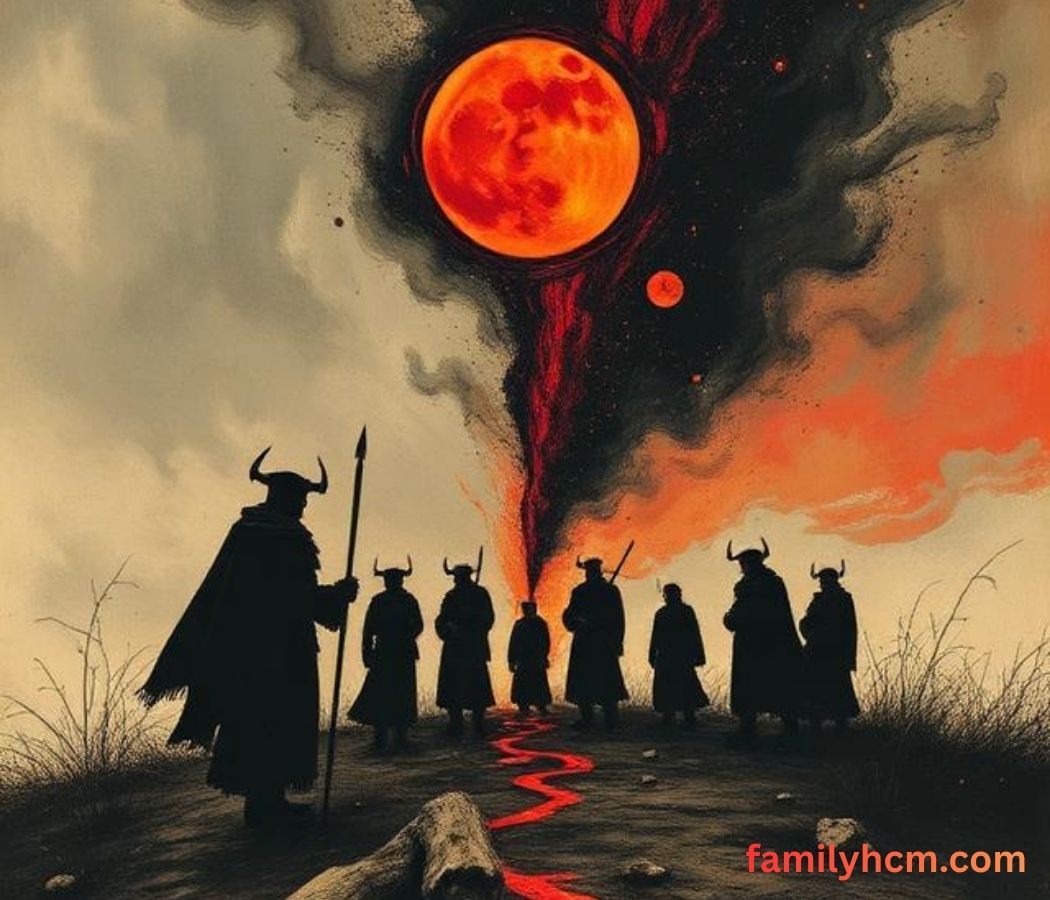
Tomorrow, and tomorrow, and tomorrow Macbeth: In the dark, desperate final act of Shakespeare’s most terrifying tragedy, a broken king stares into the void. His wife is dead, his enemies are at the gate. His crown is about to be stripped away. And in one of the most devastating speeches ever written, he turns to face it all and says… nothing. Well, not nothing, exactly. He delivers a poetic, profound, and utterly devastating meditation on the meaninglessness of it all.
This is the “Tomorrow, and tomorrow, and tomorrow” soliloquy from William Shakespeare’s Macbeth (Act 5, Scene 5). Spoken at the moment Macbeth receives news of his wife’s death, it is a poignant reflection on the futility of life. In this deep-dive analysis, we’ll explore the meaning, context, literary devices, and the lasting impact of one of Shakespeare’s most famous works.
The Full Soliloquy (Act 5, Scene 5, Lines 17–28)
Before we jump into the analysis, let’s look at the unedited, full text of the speech as it appears in the Folio:
She should have died hereafter;
There would have been a time for such a word.
— To-morrow, and to-morrow, and to-morrow,
Creeps in this petty pace from day to day,
To the last syllable of recorded time;
And all our yesterdays have lighted fools
The way to dusty death.
Out, out, brief candle!
Life’s but a walking shadow, a poor player
That struts and frets his hour upon the stage
And then is heard no more. It is a tale
Told by an idiot, full of sound and fury,
Signifying nothing.
Part 1: Context – The World Has Crumbled
To understand the weight of these words, you need to understand the exact moment Macbeth speaks them. It’s the beginning of the fifth scene of Act 5. The English army, led by Malcolm and Macduff, is approaching Macbeth’s castle at Dunsinane to besiege it. Macbeth is initially confident—because the witches’ prophecy told him he cannot be harmed by any man “of woman born.” However, just before this scene, he hears the cry of a woman inside the castle: the Queen is dead.
When his servant Seyton brings him the news of Lady Macbeth’s death, the king does not outwardly weep. Instead, he utters the infamous line, “She should have died hereafter; / There would have been a time for such a word.”
There are two popular interpretations of this reaction:
-
The Cold Tyrant: Macbeth is so consumed by his own ambition and looming battle that he is completely indifferent to the loss of his partner in crime. She is simply an inconvenience dying at the wrong time.
-
The Numb Partner: Macbeth is in such deep shock and trauma (what we might call PTSD today) that he simply cannot process the grief right now. He exists in a state of emotional paralysis. The use of “hereafter” (meaning “later” or “after death”) suggests he always knew she would die eventually; he just didn’t want to deal with it while fighting a war.
Either way, this emotional detachment immediately leads into the soliloquy, where he stops talking about her death and starts lamenting the death of all meaning.
Part 2: Analysis – A Step-by-Step Breakdown of Despair
Shakespeare uses this 11-line speech to summarise the entirety of the human experience through four incredibly dark metaphors. This is widely considered one of the greatest soliloquies ever written; playwright Tennessee Williams once famously argued that it is “greater than any in Hamlet.”
1. Time as a Torturer
“Tomorrow, and tomorrow, and tomorrow, Creeps in this petty pace from day to day…”
Right from the opening line, the repetition is brutal. Unlike the optimism usually associated with the word “tomorrow” (think Annie), here, every repeated “tomorrow” is another nail in the coffin.
-
Personification: Time is given human traits—it “creeps.” It moves slowly, painfully, and monotonously.
-
“Petty Pace”: This is disdainful. Macbeth calls the advancement of days small, mean, and insignificant. He suggests that the universe runs on a cheap, slow clock that offers no excitement, only inevitable decay.
-
“The last syllable”: He ties time to language, specifically a script. Life is a “recorded” track; once the recording ends (“the last syllable”), the player (humanity) simply stops.
2. Death as Dust
“And all our yesterdays have lighted fools The way to dusty death.”
This is a bleak look at history. “Yesterdays” (the past) are like torches. They don’t light the way to glory or wisdom; they light the way to the grave.
-
Biblical Echoes: The phrase “dusty death” references the Book of Genesis: “Dust thou art, and unto dust shalt thou return” (Genesis 3:19). By calling men “fools,” Macbeth argues that anyone who thinks they can cheat mortality or find permanent meaning in earthly power is stupid.
3. The Candle and the Shadow
“Out, out, brief candle! Life’s but a walking shadow…”
Right after mentioning his dead wife, he shouts “Out, out.” This might echo Lady Macbeth’s sleepwalking line, “Out, damned spot!” (Act 5, Scene 1), linking his psychological torture to hers.
-
Brief Candle: This is a metaphor for fragility. A candle flame is beautiful, but the slightest breath of wind (or sickness, or sword) can extinguish it instantly.
-
Walking Shadow: A shadow is flat, intangible, and a mere copy of reality. Macbeth suggests we are not real beings; we are empty illusions passing over a wall. If you’ve ever felt like you’re just going through the motions, you understand this line.
4. The Actor and the Idiot
“…a poor player That struts and frets his hour upon the stage And then is heard no more. It is a tale Told by an idiot, full of sound and fury, Signifying nothing.”
This is the climax of nihilism. In Shakespeare’s time, actors were considered low-class, often transient vagabonds (the “poor player”).
-
The Actor: We are just performing a role. We dress up, we speak loudly (“strut and fret”—to fret means to worry or agitate), we have our “hour of fame,” and then we walk off the stage of life and are immediately forgotten. It implies that our “achievements” are as fake as an act in a play.
-
The Idiot: Shakespeare goes further than calling life a play; he says the writer of the play is an idiot (from the Greek idiotes, meaning a private person lacking professional skill; generally a madman).
The story makes no sense. It is full of “sound and fury”—noise, violence, and passion—but ultimately, it has no plot, no moral, and no point. It means nothing.
Part 3: Themes – The Birth of Nihilism
Macbeth’s speech is one of the earliest and most powerful expressions of existential nihilism in Western literature:
-
The Futility of Ambition: Macbeth has spent the entire play killing friends, usurping the throne, and ruining his sanity to gain power. Now, with his wife dead and the army outside, he realizes that all his “Tomorrows” of planning amounted to nothing. Power did not protect him from pain.
-
The Inevitability of Death: No matter how fast or slow the “creeping” pace, time ends the same way for everyone. The king and the fool both end in “dusty death.”
-
Loss of Faith: This is strangely similar to the Biblical book of Ecclesiastes (often attributed to King Solomon). In Ecclesiastes, the writer laments that “All is vanity.” Scholars have noted direct echoes between Shakespeare’s “tale told by an idiot” and the Psalmist’s “We spend our years as a tale that is told” (Psalm 90:9). Macbeth is essentially an Old Testament-style pessimist who has lost all hope in a just God or a meaningful universe.
Part 4: Why is the “Tomorrow” Soliloquy Still Haunting Us Today?
You don’t have to be a Shakespeare scholar to recognize the phrases from this speech. They have bled deep into modern global culture:
-
The Sound and the Fury: William Faulkner’s entire masterpiece, the novel The Sound and the Fury, takes its famous title directly from the last line of this soliloquy.
-
Modern Novels: Gabrielle Zevin’s 2022 blockbuster bestseller is titled Tomorrow, and Tomorrow, and Tomorrow. It uses the famous speech’s rhetoric about the passage of time and futile “strutting” to explore the world of video game creators. In the book, one character interprets the “tomorrows” not as depressing emptiness, but as the possibility of infinite rebirth found in video games, where you can always start over if you die.
-
Hamilton (The Musical): In Lin-Manuel Miranda’s Hamilton, the character of King George III croons, “Tomorrow and tomorrow and tomorrow / Creeps in this petty pace from day to day” as a nod to the fact that he will still be king long after the American colonists are “toast.”
-
Titles: The phrase “All Our Yesterdays” has been used for countless science fiction titles; “Petty Pace” is a common short story name. As one literary critic noted, “Is there any other five-line passage even in Shakespeare that has had each line mined for titles?”
Conclusion
The “Tomorrow, and tomorrow, and tomorrow” speech is the logical end point of the play. Macbeth started as a brave general dreaming of greatness. He ends as a hollow monster realizing that greatness is a ghost. When he says life is “a tale told by an idiot, signifying nothing,” he is finally admitting the truth he has known all along: his crimes were not worth it.
It is a deeply pessimistic reading of the human condition, yet we cannot stop revisiting it. In times of grief, burnout, or loss, most of us have felt time “creep” by. We have felt like “poor players” on a stage. Shakespeare captured the feeling of hitting rock bottom in just 11 lines, which is exactly why, centuries later, we still listen to the idiot’s tale.
FAQs: “Tomorrow, and tomorrow, and tomorrow” from Macbeth
1. What does “Tomorrow, and tomorrow, and tomorrow” mean in Macbeth?
In the play, this phrase reflects Macbeth’s deep despair after learning of his wife’s death. The repetition of “tomorrow” suggests that time drags on pointlessly, one day after another, leading only to death. It expresses the idea that life is monotonous, meaningless, and ultimately without purpose.
2. Who says “Tomorrow, and tomorrow, and tomorrow”?
The speech is spoken by Macbeth in Act 5, Scene 5, right after he is told that Lady Macbeth has died.
3. What is the full “Tomorrow” soliloquy?
The full text is:
She should have died hereafter;
There would have been a time for such a word.
— To-morrow, and to-morrow, and to-morrow,
Creeps in this petty pace from day to day,
To the last syllable of recorded time;
And all our yesterdays have lighted fools
The way to dusty death.
Out, out, brief candle!
Life’s but a walking shadow, a poor player
That struts and frets his hour upon the stage
And then is heard no more. It is a tale
Told by an idiot, full of sound and fury,
Signifying nothing.
4. Why is this soliloquy so famous?
It is famous because it captures universal existential dread – the feeling that life is short, meaningless, and full of suffering. Its powerful metaphors (candle, shadow, poor player, tale told by an idiot) have influenced literature, music, and film for over 400 years.
5. Is Macbeth being sad about his wife’s death?
Not exactly. He shows little grief. Instead, the news triggers a philosophical outburst about the emptiness of all human effort. Some critics argue he is too numb to mourn; others believe he is simply selfish and indifferent by this point in the play.
6. What does “Out, out, brief candle!” mean?
It is a metaphor for the fragility and shortness of life. A candle flame can be blown out in an instant, just as a person can die suddenly. Macbeth is essentially saying, “Extinguish life – it barely lasts.”
7. Where else has this speech been referenced?
Many works reference it, including:
-
William Faulkner’s novel The Sound and the Fury (title from “full of sound and fury”)
-
Gabrielle Zevin’s bestselling novel Tomorrow, and Tomorrow, and Tomorrow
-
The musical Hamilton (King George III sings the first line)
-
TV shows like Breaking Bad and Succession
-
The song “Tomorrow and Tomorrow” by Hecq
8. What literary devices are used in the soliloquy?
-
Repetition – “Tomorrow, and tomorrow, and tomorrow”
-
Personification – Time “creeps”
-
Metaphor – Life as a candle, a shadow, a player on a stage, a tale told by an idiot
-
Alliteration – “dusty death,” “sound and fury”
-
Assonance – Repetition of short vowel sounds to mimic weariness
9. Does this soliloquy mean Shakespeare was an atheist or nihilist?
Not necessarily. The speech reflects a character’s emotional state, not the author’s beliefs. Shakespeare often placed dark, despairing words in the mouths of tragic villains (like Macbeth or Hamlet). At the same time, other characters in his plays express strong faith in God, order, and meaning.
10. How does this speech connect to the rest of Macbeth?
It is the turning point where Macbeth stops fighting for the crown and accepts his doom. His earlier ambition has burned out. The speech shows that unchecked ambition – gaining the whole world but losing your soul, your wife, and your sanity – is ultimately pointless.
11. What is the best performance of this soliloquy?
Many actors have delivered memorable versions:
-
Ian McKellen (1979 RSC production / 2010 film) – raw, exhausted, terrifying
-
Patrick Stewart (2010 film) – delivered in a bombed-out castle, very modern
-
Orson Welles (1948 film) – intense, noir-style
-
Michael Fassbender (2015 film) – quiet, broken, almost whispered
12. Why does Macbeth say “She should have died hereafter”?
This line is famously ambiguous. It probably means: “She would have died eventually anyway; why now?” Macbeth may be saying he wishes she had lived longer, or he may be coldly dismissing her death as inevitable. Either way, it immediately leads into his larger meditation on the futility of life.
13. Is “Tomorrow, and tomorrow, and tomorrow” iambic pentameter?
Mostly, but Shakespeare breaks the rhythm deliberately. The opening “Tomorrow, and tomorrow, and tomorrow” includes extra syllables to mimic the dragging, creeping passage of time. The lack of perfect meter creates a halting, weary effect.
14. Can this speech be seen as hopeful?
Typically, no – it is one of the bleakest passages in English literature. However, some modern readers reinterpret it as a call to live in the present moment. If life is brief and meaningless, you might as well reject false ambition and focus on small joys, relationships, or art. That’s a more optimistic reading, but not what Shakespeare’s Macbeth intends.
15. Why should I study this soliloquy today?
Because it speaks to modern burnout, depression, and the fear of wasted time. In a world that demands constant productivity and achievement, Macbeth’s words remind us that rushing from one “tomorrow” to another without meaning is a trap. It is a powerful warning against letting ambition consume your humanity.