In an era where sustainability is more than just a buzzword, understanding the terminology behind the eco-friendly products we use daily is crucial. One term that has gained significant traction, particularly in German-speaking markets and the global packaging industry, is Rezyklatanteil.
But what exactly does it mean, and why is it so important for our future? Is it the same as the recycling rate? This comprehensive guide will explore the definition of Rezyklatanteil, its calculation, its benefits, the challenges it faces, and how it is shaping a more circular economy.
Table of Contents
ToggleWhat Exactly Does Rezyklatanteil Mean?
Rezyklatanteil (pronounced Re-tzy-claht-an-tile) is a German term that directly translates to “recycled content” or “proportion of recycling material”. The official definition, as provided by the German Environment Agency (Umweltbundesamt), is: the proportion of recycled material in the total material input used to manufacture a product.
People also sometimes call it Rezyklateinsatzquote.
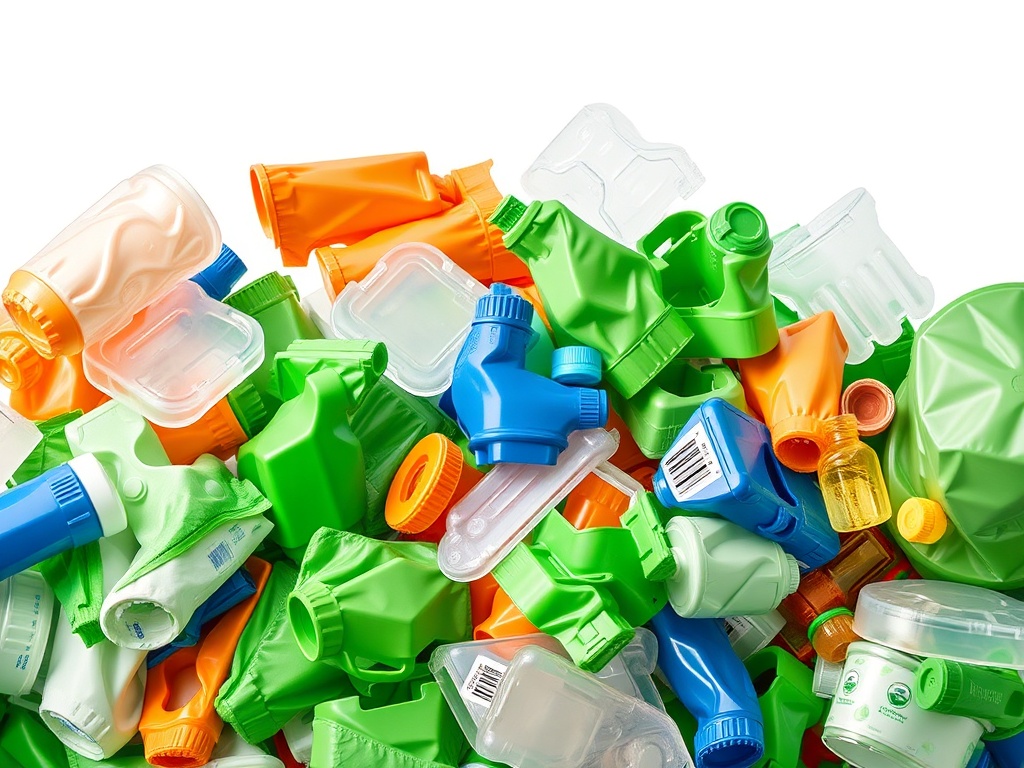
In simple terms, it shows what percentage of a product—like a plastic bottle, a cardboard box, or film wrap—comes from materials recovered from waste and reprocessed, rather than from 100% virgin, newly extracted resources.
When you discuss Rezyklatanteil, you should also distinguish between the two main sources of recycled materials:
- Post-Industrial Recyclates (PIR): Manufacturers obtain these from waste generated during production, such as production scraps. This material is usually clean and homogeneous, making it high quality.
- Post-Consumer Recyclates (PCR): Recycling systems collect these from consumers and households (for example, the contents of Germany’s Yellow Bag). Processors face greater challenges with PCR because it mixes different materials and requires advanced sorting and cleaning technologies.
Rezyklatanteil vs. Recyclingquote: A Critical Distinction
One of the most common points of confusion is the difference between Rezyklatanteil (recycled content) and Recyclingquote (recycling rate). While they are related concepts in a circular economy, they measure two completely different things.
The table below breaks down the key differences:
| Feature | Rezyklatanteil (Recycled Content) | Recyclingquote (Recycling Rate) |
|---|---|---|
| Perspective | Input-focused: It looks at what goes into making a new product. | Output-focused: It looks at what happens to waste after a product is used. |
| Definition | The percentage of recycled material used in the manufacturing of a new product. | The percentage of waste material that is actually collected and processed into recycled materials. |
| Key Question | “How much of this new bottle is made from old plastic?” | “How much of the plastic we threw away was actually recycled?” |
| Goal | To create demand for recyclates and close the loop by using waste as a resource. | To divert waste from landfills and incinerators and feed it back into the economy. |
A high recycling rate must supply enough material, but the Rezyklatanteil ultimately determines whether that material gets used again and successfully closes the loop.
How do you calculate Rezyklatanteil?
The calculation is generally straightforward, though rules about what can be counted are becoming stricter. Manufacturers typically measure it by mass.
The basic formula is:
Rezyklatanteil = (Mass of recycled material in the product / Total mass of the product) × 100%
For example, if a plastic bottle weighs 100 grams and 50 grams of it comes from post-consumer recyclates, the Rezyklatanteil equals 50%.
However, you must determine what qualifies as “recycled material.” Germany’s Kreislaufwirtschaftsgesetz (Circular Economy Act) requires that recyclates originate from a waste stream. That means companies cannot count internal production scraps that they simply re-feed into the same manufacturing process as part of the Rezyklatanteil.
The Crucial Role of Rezyklatanteil in Sustainability
Why is everyone talking about Rezyklatanteil? Because it is a powerful lever for achieving true sustainability.
-
Conserves Natural Resources: By using existing materials, we reduce the demand for virgin raw materials like oil (for plastics), trees (for paper), and ores (for metals).
-
Reduces Energy Consumption and Emissions: Manufacturing with recycled materials almost always requires less energy than producing from scratch. This leads to a significant reduction in greenhouse gas emissions.
-
Prevents Waste: High recycled content creates a strong economic incentive for recycling. It turns our trash into a valuable commodity, keeping it out of landfills and incinerators.
-
Drives the Circular Economy: It is the fundamental building block of a circular system where materials are kept in use for as long as possible, rather than the traditional “take-make-dispose” linear model.
Real-World Examples: Companies Leading the Way
The push for higher Rezyklatanteil is not just theoretical; it is happening now across various industries.
-
Kaufland (Retail): The German supermarket chain has made significant strides with its own brand products. For its K-Classic WC cleaners and scouring milk, Kaufland increased the Rezyklatanteil in the bottle body from 50% to an impressive 99% using post-consumer recyclates. This single change saves 75 tons of new plastic annually.
-
Saperatec, Wentus & Henkel (Packaging): This collaboration produced a prototype for a flexible laundry detergent pouch. The innovative design allows the pouch to be made with 35% post-consumer recyclate sourced from old beverage cartons, demonstrating how even complex, flexible packaging can incorporate recycled content.
-
Brangs + Heinrich (Logistics): At the FACHPACK 2024 trade fair, this company showcased new recycling stretch films with a certified Rezyklatanteil of at least 35% PCR. This directly helps their customers prepare for the upcoming European Packaging Regulation (PPWR).
Benefits and Challenges of High Recycled Content
Incorporating a high Rezyklatanteil offers numerous advantages, but it is not without its hurdles.
Benefits:
-
Competitive Advantage: Eco-conscious consumers actively seek out and remain loyal to brands with strong sustainability credentials.
-
Regulatory Compliance: With laws like the EU’s Packaging and Packaging Waste Regulation (PPWR) mandating minimum recycled content, adopting it now future-proofs your business.
-
Innovation Driver: The need to use recyclates pushes companies to innovate in design and technology to maintain product quality.
Challenges:
-
Material Quality and Purity: Recycled materials, especially PCR, can vary in quality and may contain contaminants, making it difficult to use in high-spec applications like food packaging.
-
Consistent Supply: There is often a lack of reliable, high-quality recyclate available in the market to meet the growing demand.
-
Technological Limitations: Not all manufacturing equipment is optimized to handle the flow characteristics and melting points of recycled materials.
-
Cost: In some cases, high-quality recyclates can be more expensive than virgin materials, though this is changing.
The Future of Rezyklatanteil
The future of product design and manufacturing is inextricably linked to Rezyklatanteil. The European Union is leading the charge with ambitious targets through the PPWR, which will mandate minimum recycled content for various types of packaging in the coming years.
This regulatory pressure, combined with consumer demand, is forcing the entire value chain to adapt. We will see increased investment in advanced sorting and recycling technologies, new design-for-recycling principles, and a fundamental shift in how we view waste—not as an end-product, but as the starting point for something new.
Conclusion
Rezyklatanteil is far more than just a technical term. It is a tangible, measurable commitment to environmental stewardship. It represents the shift from a wasteful society to a circular one, where materials retain their value. By understanding and prioritizing recycled content, both companies and consumers can play an active role in conserving resources, protecting the climate, and building a truly sustainable future. The next time you pick up a product, look beyond the label; look for the story of its materials and ask yourself: what is its Rezyklatanteil?
Frequently Asked Questions (FAQs) About Rezyklatanteil
To help clarify this important topic, here are answers to some of the most frequently asked questions about recycled content.
1. Is it safe to use products with a high Rezyklatanteil for food?
Yes, it is strictly regulated. The safety of food contact materials is paramount. In the EU, materials with recycled content intended to come into contact with food must undergo a rigorous authorization process by the European Food Safety Authority (EFSA). They remove any potential contaminants from the recycling process and make the material safe for its intended use. Technologies such as “super-clean” recycling processes specifically meet these high safety standards.
2. How can a consumer identify the Rezyklatanteil of a product?
Identifying it can sometimes be tricky, but there are several ways:
-
Look for Labels: Look for certification labels like the “Blue Angel” (Der Blaue Engel) in Germany. Products with this label often have high recycled content. Other common labels include the EU Ecolabel and various “Recycled Content” certifications.
-
Check the Packaging Itself: Many companies, like Kaufland in the examples above, proudly state on the packaging “includes X% recycled material” or “made from X% PCR.”
-
Read the Fine Print: Sustainability reports and product specifications on company websites are the best place to find detailed information.
3. Is “Rezyklatanteil” the same as “biodegradable” or “compostable”?
No, these are completely different concepts.
-
Rezyklatanteil refers to what the product is made from (recycled material).
-
Biodegradable/Compostable refers to what happens to the product at the end of its life (it breaks down naturally).
A product made from recycled plastic is designed to be recycled again, not to biodegrade. Confusing these terms can undermine recycling efforts.
4. Does a high Rezyklatanteil mean the product can be easily recycled again?
Not necessarily. A high recycled-content share does not automatically make a product easy to recycle. Even if manufacturers use recycled materials, designers who combine multiple materials, apply problematic colors, or use hard-to-remove glues can make the product difficult to recycle at end of life. That is why designers must follow Design for Recycling. Products that both use recycled content and are designed to be fully recyclable support a true circular economy.
5. Is there a difference in quality between virgin material and recyclate?
It depends on the application and the quality of the recycling process. Modern recycling technologies have advanced significantly. In many applications, such as bottles, films, and fibers, high-quality recyclates can perform just as well as virgin materials. However, in very high-tech applications (like certain medical devices or load-bearing engineering parts), achieving the exact same specifications with 100% recyclate can be more challenging. This is an area of intense research and development.
6. What is the difference between mechanical and chemical recycling?
This relates to how the recyclate is produced.
-
Mechanical Recycling: This is the most common method. Plastics are sorted, washed, ground into flakes, and melted to form new granules. It is energy-efficient but can lead to a slight degradation in quality over time.
-
Chemical Recycling: This breaks down plastic polymers into their original building blocks (monomers) or into basic chemicals like oil and gas. This process can handle more contaminated and mixed plastic waste and produces a material that is virtually identical to virgin material, potentially allowing for infinite recycling.
7. Can paper and cardboard have a Rezyklatanteil?
Absolutely. The concept applies to all materials. In fact, the paper industry has been using recycled content for decades. The Rezyklatanteil in cardboard boxes, newspapers, and tissue paper is often very high.
Each time papermakers recycle paper, the fibers shorten. So they must add virgin fibers to the cycle to maintain strength and quality.
8. Why isn’t the Rezyklatanteil already 100% for all products?
Several factors prevent this:
-
Availability: There simply isn’t enough high-quality, sorted recyclate available to meet the demand for all products.
-
Quality for Food: Strict safety regulations for food contact materials make it harder to use a very high percentage of recycled plastic, as it must be guaranteed contaminant-free.
-
Technical Limits: As mentioned, some products have very specific technical requirements that are currently difficult to meet with 100% recycled material.
-
Color and Aesthetics: Recycled plastic, especially from mixed sources, often has a grey or dull color (like the common “grey” bottle), which may not be desirable for all brands.
9. What is the PPWR and how does it relate to Rezyklatanteil?
The Packaging and Packaging Waste Regulation (PPWR) is a new, ambitious law from the European Union. Its goal is to make all packaging on the EU market reusable or recyclable by 2030. Crucially, it sets mandatory minimum recycled content targets for different types of plastic packaging. For example, by 2030, single-use PET plastic bottles must contain at least 30% recycled material. This regulation is the single biggest driver pushing companies to increase their Rezyklatanteil.
10. Where can I learn more about Rezyklatanteil and recycling?
Excellent resources include:
-
German Environment Agency (Umweltbundesamt): The official source for definitions and data.
-
Your Local Waste Management Company: They provide specific information on what can be recycled in your area.
-
Industry Associations: Groups like Plastics Europe or the European Paper Recycling Council publish detailed reports on recycling rates and technologies.