If you’ve come across the term “Peitner” recently, you might be feeling a bit confused. It turns out that this single word holds a handful of completely different meanings, from a rare European surname and a hidden Austrian village, to a modern productivity framework, a tech company, and more. Here’s your complete guide to the many faces of Peitner.
Table of Contents
ToggleThe Peitner Surname
If your name is Peitner, your family likely has deep roots in the mountainous heart of Central Europe. The surname carries a rich cultural heritage, primarily from the Alpine regions of Austria (especially Tyrol), southern Germany, and northern Italy. It is considered part of a broader family of names that includes the variant Peintner.
Most scholars agree that the name is a “topographic” surname, originally used to describe where a person lived. It likely referred to someone who lived near a mountain slope, ridge, or hilly terrain (from the Germanic root “Peit,” possibly meaning a mountain spur or hillside). The “-er” suffix in Germanic languages typically means “from or associated with,” so “Peitner” could be loosely translated as “one from the slope”.
While the topographic explanation is most common, another theory suggests the name could have an occupational origin, possibly linked to metalworking or craftsmanship in medieval Alpine communities. The name gained prominence during the Middle Ages as populations grew, requiring clearer ways to identify individuals and families. These names were often recorded in church books and land documents. Today, you can find Peitner families not only in Europe but also across the globe, particularly in North America, Australia, and other regions, due to historical migration.
Peitner, Tyrol: A Hidden Austrian Gem
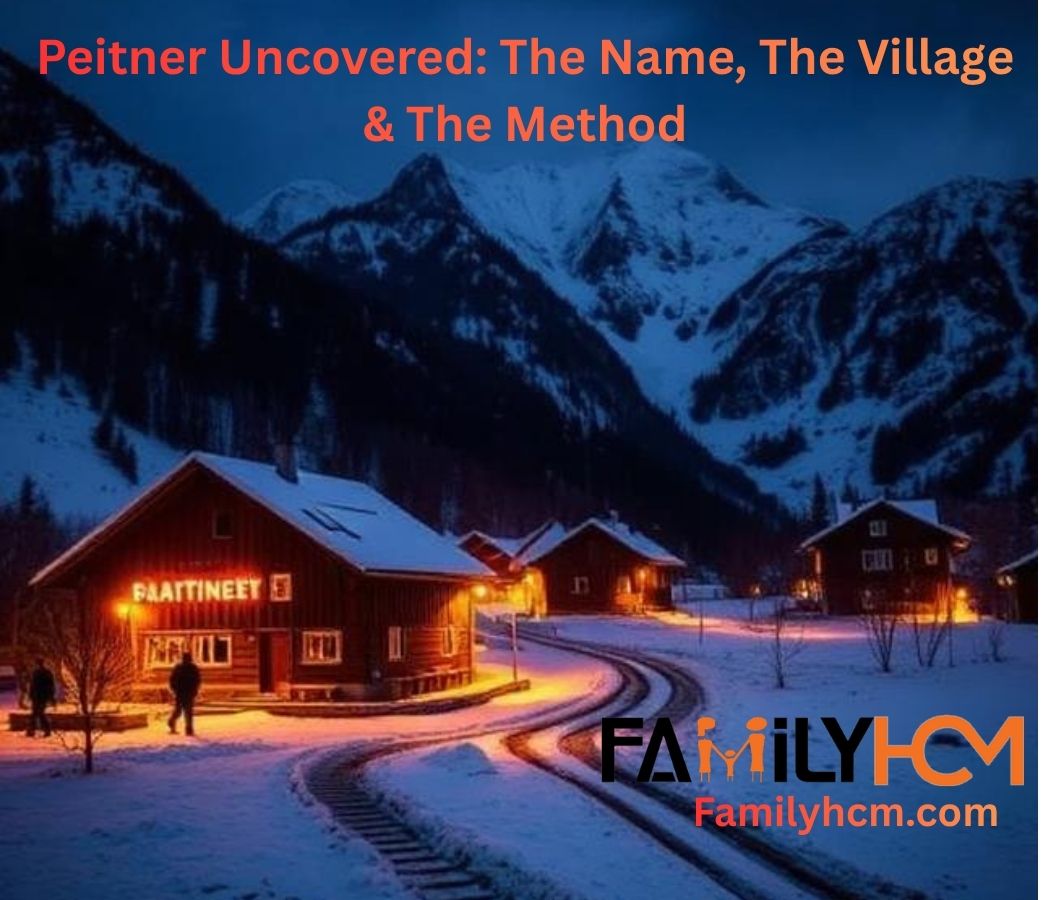
Peitner isn’t just a surname; it’s also a breathtaking, real-world place. Nestled in the heart of the Tyrol region of Austria, this charming destination is often overlooked by the typical tourist trail, making it a “hidden gem”.
Imagine the scenery of the Austrian Alps: a unique blend of rolling hills, lush valleys, and majestic mountains with snow-capped peaks contrasting vividly with vibrant green meadows. This is the landscape of Peitner, where winding rivers carve their way through the terrain, creating stunning vistas at every turn. The area is a paradise for outdoor enthusiasts, with countless hidden trails perfect for hiking and biking.
The village is also a treasure trove of traditional Tyrolean culture. Locals take great pride in their heritage, which they showcase during vibrant festivals. You’ll see traditional dirndls and lederhosen, listen to folk music that fills the air, and enjoy lively community dances. No visit would be complete without savoring the local cuisine. Be sure to try regional dishes like speck platter and strudel, which are often enjoyed as part of family and community gatherings.
What to See:
-
The Iconic Peitner Church – Known for its striking architecture and serene atmosphere.
-
Local Artisan Shops – Where skilled artisans create exquisite textiles and woodwork using techniques passed down through generations.
-
Scenic Hiking Trails – Perfect for exploring the breathtaking alpine landscape up close.
The Peitner Methodology: A Framework for Success
In a more abstract context, “Peitner” is also emerging as a term for a modern productivity and problem-solving approach. It’s best described as a methodology for structured creativity and execution that is gaining attention in the digital world.
The core idea of the Peitner methodology is to help individuals and teams move forward without losing direction by blending planning, creativity, and adaptability. Unlike rigid traditional systems, Peitner allows for high flexibility without sacrificing structure. It is built on three foundational components: Strategic Planning (with room for adjustments), Creative Execution (guided within a structured framework), and Continuous Optimization (regularly refining your process).
How to Apply the Peitner Framework in 5 Steps
-
Define Your Goal: Be clear about what you want to achieve.
-
Break It Down: Divide your goal into actionable, manageable steps.
-
Allow Flexibility: Stay adaptable during execution. Rigidity can kill progress.
-
Monitor Results: Regularly check your performance and gather feedback.
-
Optimize: Use your learnings to refine your strategy and improve outcomes over time.
While the framework is praised for being flexible, easy to implement, and innovative, it’s important to avoid common mistakes like ignoring data, overcomplicating the process, or lacking clear goals. If a rigid plan often leaves you stuck, the Peitner mindset could be a great tool to try.
Peitner in Business & Technology
Beyond a surname, a place, and a methodology, “Peitner” also appears in the business world in a few different ways.
Harbin Peitner Biotechnology Development Co., Ltd.
One of the most distinct commercial entities with this name is the Harbin Peitner Biotechnology Development Co., Ltd., a company based in Heilongjiang Sheng, China, that was founded in 2012.
This company specializes in biological products and food technology development, including technical consulting and services. With an impressive portfolio of 188 patents, the company is a significant player in its field. It is notably active in sectors like baking powder and waxy corn (glutinous corn) technology.
Peitner Fliesen GmbH
“Peitner” also appears in the building trade as Peitner Fliesen GmbH, a family-run tile company operating in the German-speaking Alpine region. The company is known for its customer-centric approach and high-quality service.
Peitner Software & Technology (Related Terms)
If you were searching for a software tool, you might have been looking for a different but similar name:
-
Pentera: A leading automated security validation platform for cybersecurity. It uses AI to help companies continuously test their network security by emulating real-world attacks, identifying exploitable gaps, and prioritizing risks.
-
Pinter: A popular home beer-making device, often confused with “Peitner”.
Peitner in Art & Culture
The world of art also features names that are close to “Peitner.”
Jan Pleitner (German Abstract Painter)
Perhaps the most notable artistic link is Jan Pleitner, a contemporary German artist. His abstract paintings, like Untitled, 2018, are known for their dizzying, psychedelic style that combines strident primary colours with a shallow, broken pictorial space. He was a student of the controversial artist Jörg Immendorff, and his work is designed to keep the viewer’s eye unsettled and gaze from ever truly resting.
Eduard Peithner von Lichtenfels (19th-Century Austrian Landscape Artist)
Eduard Peithner von Lichtenfels was a prominent Austrian landscape painter and professor who lived from 1833 to 1913. He was known for his mastery of watercolor and pen-and-ink techniques, often creating dramatic scenes capturing the “inner drama” of nature, such as uprooted trees on a slope that increase the tension in the picture. His students included many notable artists, such as Ferdinand Andri and Johann Nepomuk Geller.
Related Artists
-
Joachim Patinir: A Flemish painter from the late 15th and early 16th centuries who is widely recognized as a pioneer of landscape as an independent genre in Western art.
-
Milton Avery: An American artist known for his unique, colorful, and simplified depictions of landscapes and domestic scenes, one of which is called Pitcher Painter.
Summary: Which Meaning is Right For You?
As you can see, “Peitner” is a word of many worlds. Here’s a quick cheat sheet to help you identify which one you’ve encountered:
| Context | What is it? | Key Takeaway |
|---|---|---|
| A person | A surname | A rare European name from the Alps, meaning “one from the slope.” |
| A place | A hidden gem in Austria | A stunning village in Tyrol for hiking, culture, and strudel. |
| A process | A productivity framework | A modern method for structured creativity and adaptability. |
| A company | A business entity | Most often refers to a Chinese biotech firm (Harbin Peitner). |
| A near-miss | A common typo | You might have meant the cybersecurity software Pentera. |
So, which Peitner brought you here today? Knowing your “why” is the first step to unlocking all the stories this fascinating word has to tell.
FAQs About Peitner
1. What does the surname Peitner mean?
Answer:
The surname Peitner is of Central European origin, most common in Austria (especially Tyrol), southern Germany, and northern Italy. It is primarily a topographic surname, meaning it describes where a person lived. The root “Peit” likely refers to a mountain slope, ridge, or hillside, and the “-er” suffix means “from or associated with.” So Peitner roughly translates to “one from the slope.” A less common theory suggests it could also have been an occupational name for a metalworker or craftsman in medieval Alpine communities.
2. Is Peitner a real place?
Answer:
Yes. Peitner is a small, scenic village in the Tyrol region of Austria. It’s considered a “hidden gem” because it’s off the typical tourist trail. The area features classic Alpine landscapes: rolling hills, lush valleys, snow-capped peaks, and winding rivers. Visitors enjoy hiking, biking, traditional Tyrolean festivals (with dirndls and lederhosen), and local cuisine like speck platter and apple strudel. Key sights include the Peitner Church and local artisan shops selling textiles and woodwork.
3. What is the Peitner methodology?
Answer:
The Peitner methodology is a modern productivity and problem-solving framework that blends planning, creativity, and adaptability. Unlike rigid systems, it allows flexibility while maintaining structure. It has three core components:
-
Strategic Planning (with room for adjustments)
-
Creative Execution (guided within a framework)
-
Continuous Optimization (regular refinement)
The 5-step process is:
-
Define your goal.
-
Break it into manageable steps.
-
Stay flexible during execution.
-
Monitor results.
-
Optimize based on feedback.
It’s ideal for teams or individuals who feel stuck with overly rigid plans.
4. Is there a company called Peitner?
Answer:
Yes, there are a few:
-
Harbin Peitner Biotechnology Development Co., Ltd. (China, founded 2012) – specializes in biological products, food technology, baking powder, and waxy corn. Holds over 188 patents.
-
Peitner Fliesen GmbH – a family-run tile company in the German-speaking Alpine region, known for quality flooring and customer service.
There is no major global tech company called Peitner, but people often confuse it with Pentera (cybersecurity software) or Pinter (home beer brewing device).
5. Is Peitner related to the artist Jan Pleitner?
Answer:
Only by near-homophone. Jan Pleitner is a contemporary German abstract painter known for psychedelic, dizzying works with primary colors. His name sounds similar to “Peitner” but is spelled differently. There is no known family connection. Another close artistic name is Eduard Peithner von Lichtenfels, a 19th-century Austrian landscape painter who used watercolor and pen-and-ink.
6. How common is the last name Peitner today?
Answer:
The surname Peitner is rare. Most bearers live in Austria, southern Germany, and northern Italy. Due to historical migration, you can also find Peitner families in North America, Australia, and other parts of Europe. It does not appear in the top 100,000 surnames globally, making it a distinctive family name.
7. I searched for “Peitner” but got results for “Pentera” – why?
Answer:
“Pentera” is a well-known automated security validation platform used in cybersecurity. Because the spelling and pronunciation are similar, many people accidentally type “Peitner” when searching for Pentera. If you’re looking for a software tool that tests network security by simulating real-world attacks, you want Pentera, not Peitner.
8. Can I visit Peitner, Austria? What’s the best time?
Answer:
Yes, you can visit. The best times are:
-
Summer (June–August) – perfect for hiking, biking, and alpine meadows in full bloom.
-
Winter (December–March) – for snow-covered landscapes, though Peitner is not a major ski resort, so expect quiet, scenic winter walks.
There is no airport in Peitner itself. Fly into Innsbruck (INN) or Salzburg (SZG), then drive or take regional trains/buses into the Tyrolean countryside.
9. What is the most common misspelling or confusion with Peitner?
Answer:
The top confusions are:
-
Pentera (cybersecurity software)
-
Pinter (home beer brewing device)
-
Pleitner (the artist Jan Pleitner)
-
Peintner (a variant spelling of the surname)
If you are researching genealogy, try searching for Peintner as well – it’s a direct variant.
10. Is the Peitner methodology backed by research or just a blog concept?
Answer:
As of now, the Peitner methodology is an emerging framework discussed in productivity blogs and team workshops. It is not yet backed by peer-reviewed academic studies. However, its principles draw from established ideas in agile project management, design thinking, and continuous improvement (Kaizen). Many users report success applying the 5-step process to personal and small-team projects.
11. Does Peitner have any religious or cultural festivals?
Answer:
Yes – in the village of it, Tyrol, locals celebrate traditional Tyrolean festivals throughout the year. These include:
-
Almabtrieb (autumn cattle drive) – decorated cows come down from mountain pastures.
-
Christmas markets – small, intimate, with mulled wine and handmade gifts.
-
Patron saint day of the Peitner Church – a local mass followed by music, dancing, and food.
These events are rarely advertised internationally, so check with the local Tyrol tourism office for exact dates.
12. I want to use “Peitner” as a brand name. Is it trademarked?
Answer:
Potentially. Harbin Peitner Biotechnology (China) likely holds trademarks in its industry (food/biology). Peitner Fliesen GmbH (tiles) has rights in the building materials sector. For other industries (e.g., software, fashion, consulting), the name may be available, but you must conduct a full trademark search in your country. Because it is a real surname and place name, it may not be registrable if it’s purely descriptive.
13. How do you pronounce “Peitner”?
Answer:
In German/Austrian dialect:
-
“Pite-ner” – where “Peit” rhymes with “bite” (long “i” sound), and “ner” is soft, like “nair.”
-
Avoid saying “Pait-ner” (as in “painter”) – that’s a common English mispronunciation.
For the village name, locals say it the same way as the surname.
14. Can I apply the Peitner methodology to my daily life?
Answer:
Absolutely. Here’s a quick example for personal fitness:
-
Define goal – Run a 5K in under 30 minutes.
-
Break it down – Run 3x/week, increase distance by 10% weekly.
-
Allow flexibility – Swap running days if it rains; try cycling once a week.
-
Monitor results – Track time, heart rate, and how you feel.
-
Optimize – Add strength training if you plateau; adjust rest days.
The framework works for any goal – work projects, learning a language, saving money, or decluttering your home.
15. Is there a connection between Peitner and “painter” (artist)?
Answer:
Only coincidental. The English word “painter” (artist) comes from Latin pictor. “Peitner” has Germanic roots meaning “slope dweller.” However, because of the sound similarity, many people mistakenly assume Peitner means painter. That’s false – but it does make the name memorable.