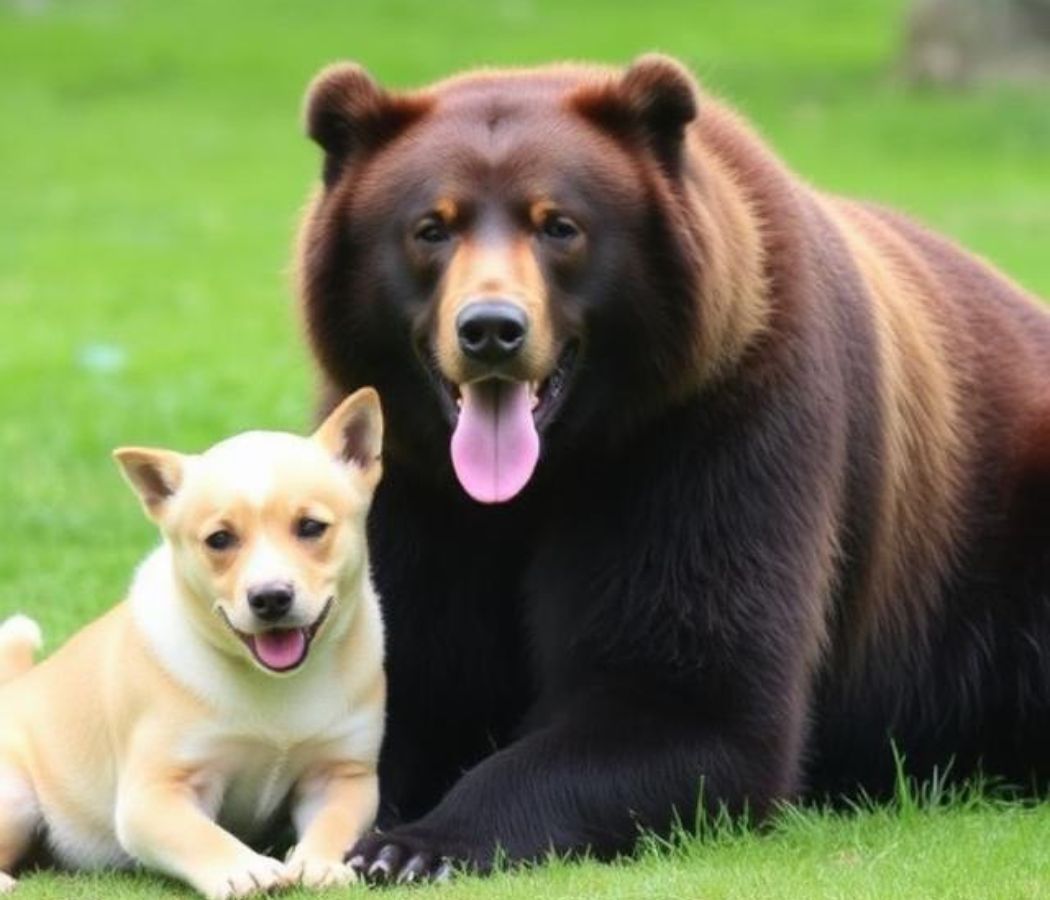
It is the ultimate nightmare of every outdoor enthusiast: You are hiking through a beautiful trail with your four-legged best friend. Suddenly, your dog bolts into the brush. Seconds later, you hear the snarling clash of fur and teeth—not with a raccoon or a squirrel, but with a 300-pound black bear.
For many, the instinct is to fight. But as one bear biologist puts it, those who rush in with “bare fists” to save their pets often face devastating consequences.
This isn’t just a “hiker’s problem.” As urban sprawl pushes deeper into wilderness areas, bears are showing up in backyards from Virginia to Idaho. The reality is that dogs and bears are a volatile mix.
While we view our dogs as family, bears view them as a threat—specifically, a “wolf on a rope” . To keep your dog safe, the wildlife safe, and yourself out of the emergency room, you need to understand the brutal statistics and the hard rules of engagement.
Table of Contents
ToggleThe “Wolf on a Rope” Phenomenon
Why do bears react so violently to domestic dogs, even small ones? The answer lies in an ancient rivalry.
According to bear biologist Tom Smith of Brigham Young University, dogs descend from wolves. In the wild, wolves and bears are “frenemies” at best and mortal enemies at worst. They constantly compete for food and will kill each other’s young if given the chance.
When a bear sees a dog—even a friendly Labrador or a Chihuahua—it does not see a pet. It sees a canine predator.
“From a bear’s perspective, a dog on a leash in the wild is basically ‘a wolf on a rope’.” – Tom Smith, Bear Biologist
This triggers an instinctive response. The bear may flee, but if it feels cornered, is protecting cubs, or is guarding a food source, it will treat that dog as a rival that needs to be eliminated.
Alarming Statistics: The Canine Conundrum
The anecdotal evidence is scary, but the data is terrifying. A comprehensive study titled “The Canine Conundrum” analyzed 326 bear-human conflicts involving dogs across North America (from 1901 to 2023) involving Black Bears, Grizzlies, and Polar Bears.
Here is what the data revealed about outcomes when dogs and bears mix:
-
Dogs Trigger the Fight: In 54% of the incidents, the dog was the initial trigger that escalated the situation.
-
They Won’t Save You: Despite the heroic stories we love to tell, dogs did not respond to bears attacking their owners in roughly 80% of cases. They often fled or sat and watched.
-
High Mortality Rate: The study found that 10 times more dogs died in these encounters than people.
-
Owner Risk: Approximately 2% of dog owners died in these confrontations—usually because they tried to physically intervene between their dog and the bear.
As the Connecticut Department of Energy and Environmental Protection warns, “If your dog gets into an encounter with a bear, there’s about a fifty percent chance it will be injured or killed. And an even higher chance you’ll be injured if you intervene”.
The Backyard Ambush: Protecting Your Property
You don’t need to be hiking in Yellowstone to have a bear encounter. Bears are opportunistic foragers. They are drawn to residential areas by smell, specifically the smell of dog food, garbage, and bird seed.
In Rutland, Massachusetts, a recent scare occurred when two dogs chased a “teenage” black bear up a tree in a backyard. While the dogs survived, it required animal control intervention. In Idaho, a Great Pyrenees—a breed specifically bred to fight predators—ended up with multiple bite puncture wounds after a scuffle with a bear.
To avoid turning your home into a bear buffet, you must modify your routine:
-
Feed Inside: This is non-negotiable. Dog food is highly palatable to bears. Never leave bowls outside overnight. “If you must feed outdoors, make sure to clean up any spilled or uneaten food”.
-
The “Porch Check”: Before letting your dog out at dawn or dusk (peak bear activity times), turn on a light, make noise, or clap your hands. You want to give any bear in the vicinity a chance to leave before your dog bursts out the door.
-
Remove Attractants: Bears can smell food up to two miles away. Secure your garbage, take down bird feeders (spring through fall), and clean greasy grills.
The Golden Rule: LEASH UP
If you take one piece of advice away from this article, let it be this: Keep your dog on a non-retractable leash.
Wildlife experts across the board—from the Virginia DWR to the American Kennel Club—agree that off-leash dogs are a disaster waiting to happen.
“In most all situations bears, hearing dogs barking, may feel nervous and react most commonly by fleeing… However, if a barking dog continues to approach the bear or chases the bear or offspring, the bear may be provoked into defending themselves.” – Virginia Department of Wildlife Resources
An off-leash dog can chase a bear a quarter of a mile away. But eventually, that dog will get scared and turn around to run back to you—often bringing the enraged, panting bear directly to your location.
What To Do In The Moment (Do Not Intervene)
Seeing your dog in a fight with a bear triggers a primal panic. You want to save your “baby.” But experts are unanimous: Do not get in between them.
“If your dog becomes engaged with a bear, DO NOT try to separate them or get in between your dog and the bear.” – Virginia DWR
A dog owner’s instinct to punch or kick the bear usually results in the bear switching its attack to the human, who is far less agile than the dog.
Instead, follow this protocol:
-
Use Bear Spray: This is the most effective tool. It works from 30 feet away. Spray the bear directly. Do not spray your dog; the spray will disperse and deter the bear.
-
Make Noise: Use an air horn, yell, or bang pots. Loud noises can startle the bear and the dog, breaking the focus.
-
Throw Objects: If you don’t have spray, throw a water bottle, a jacket, or rocks near the bear (try not to hit the dog) to scare it off.
-
Back Away Slowly: Do not run. Once the bear disengages, slowly retreat to a hard structure (car or house).
The “Aversive Conditioning” Exception
Interestingly, there is one specific scenario where dogs are used to help with bears: aversive conditioning.
In Louisiana, a study published in Human-Wildlife Conflicts found that chasing nuisance bears with specially trained Karelian Bear Dogs (in conjunction with loud noises and rubber buckshot) kept bears away for an average of 58 days, compared to just 48 days without dogs.
However, there is a massive difference between your family pet and a professionally trained bear dog. Do not attempt to train your dog to chase bears. That is a job for wildlife officials, and it requires specific breeds and rigorous training.
Conclusion: Coexistence is Possible
We are living in bear country. Whether you are in the suburbs of Boston or the mountains of Wyoming, the overlap between human habitation and bear habitat is growing.
The good news is that bears generally want to avoid us. By managing our dogs—keeping them leashed, feeding them indoors, and checking the yard before free time—we can prevent the vast majority of conflicts.
Remember: A scared bear runs away. A chased bear fights back. Be a responsible owner, not a statistic.
Frequently Asked Questions
Can my dog sense a bear before I can?
Yes, usually. If your dog stops dead, hackles raise, or points into the brush, take it seriously. Do not let them investigate. Turn around and walk the other way immediately.
Will a bell on my dog’s collar scare a bear away?
No. Bells are not loud enough to deter a bear. You need active noise (talking, clapping, shouting) or bear spray. “Bear bells” are largely considered ineffective by wildlife biologists.
What dog breeds are best for bear country?
None. While Livestock Guardian Dogs (like the Great Pyrenees) are used to protect sheep, putting a pet dog in a position to fight a bear is dangerous. Even a 120-pound dog can be severely injured by a bear. Your best defense is a leash, not a breed.
My yard is fenced. Is my dog safe?
Fences help, but bears are excellent climbers. A motivated bear can scale a standard fence in 30 seconds. Always do a visual check of your yard before letting the dog out.