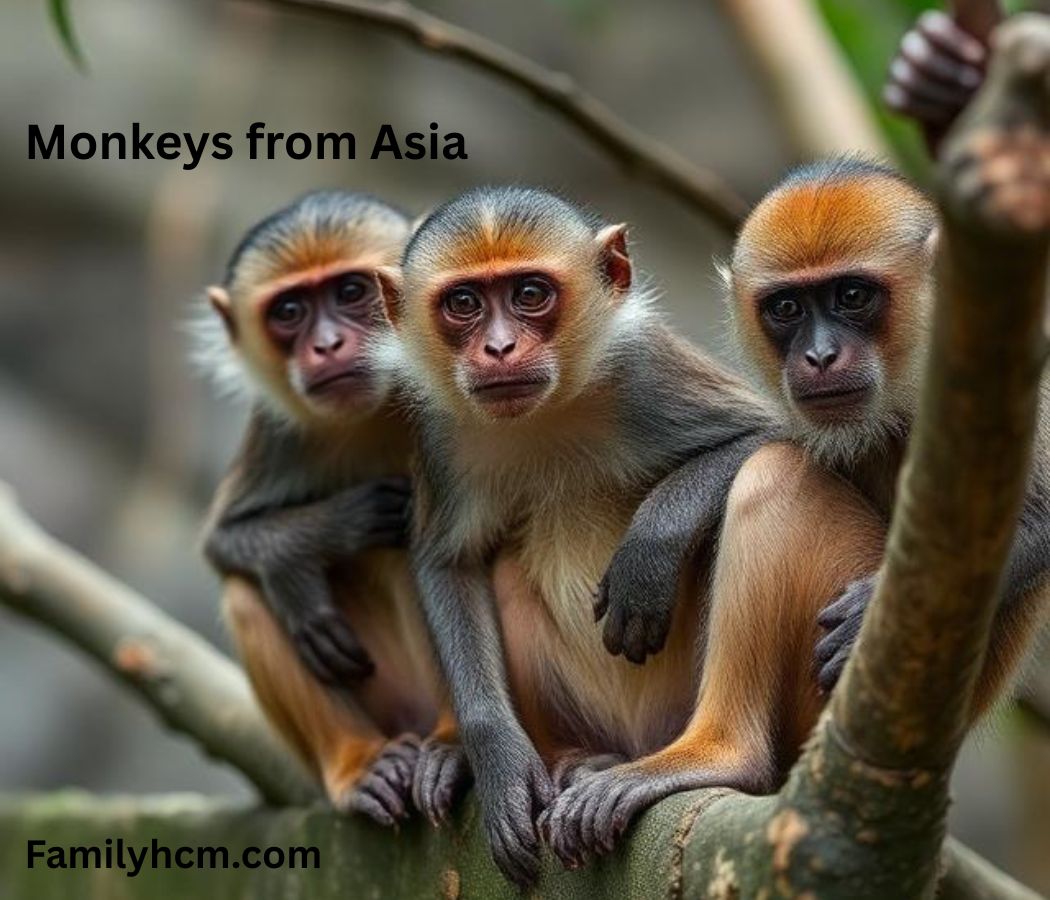
Asia is home to an astonishing diversity of primates. From the snowy mountains of Japan to the steamy jungles of Borneo, monkeys from Asia have evolved unique adaptations that set them apart from their relatives in Africa and the Americas.
In this guide, we’ll explore seven remarkable Asian monkey species, their habitats, social behaviors, and the conservation challenges they face today.
Why Asian Monkeys Are Unique
Unlike New World monkeys (found in Central and South America), most Asian monkeys belong to the family Cercopithecidae — Old World monkeys. Key differences include:
-
Narrow, downward-facing nostrils
-
Ishial callosities (hardened sitting pads on their rear ends)
-
Non-prehensile tails (they can’t use their tails to grab branches)
-
Many species have cheek pouches to store food
Asia is also home to monkeys that have adapted to extreme environments — from high-altitude mountains to urban city streets.
7 Fascinating Monkeys from Asia
1. Japanese Macaque (Macaca fuscata)
Also known as snow monkeys, Japanese macaques are the northernmost-living non-human primates on Earth. They survive winter temperatures below -15°C (5°F) by huddling together and soaking in natural hot springs in Jigokudani, Nagano.
Fun fact: They wash sweet potatoes in salt water — a learned behavior passed down through generations.
2. Proboscis Monkey (Nasalis larvatus)
Endemic to the island of Borneo, the proboscis monkey is instantly recognizable by the male’s large, pendulous nose. Scientists believe the nose amplifies mating calls.
These monkeys are excellent swimmers, with partially webbed feet. They leap directly from riverside trees into water to escape predators like crocodiles.
Conservation note: Proboscis monkeys are listed as Endangered due to habitat loss from palm oil plantations.
3. Hanuman Langur (Semnopithecus entellus)
Named after the Hindu monkey god Hanuman, these gray langurs are considered sacred throughout India, Nepal, and Sri Lanka. They live in large troops of 20 to 60 individuals.
Unlike many primates, langurs are folivorous — their diet consists mainly of leaves, which they digest in complex, multi-chambered stomachs.
4. Southern Pig-Tailed Macaque (Macaca nemestrina)
Found in Thailand, Malaysia, and Indonesia, these macaques are named for their short, pig-like tail held in a curve. They are highly intelligent and have been trained to harvest coconuts in southern Thailand — a skill that dates back centuries.
5. Golden Snub-Nosed Monkey (Rhinopithecus roxellana)
Living in the mountain forests of central and southwestern China at elevations up to 4,700 meters (15,400 feet) , these monkeys endure some of the harshest conditions of any primate. Their thick, golden fur and upturned nostrils (hence “snub-nosed”) help them survive freezing temperatures.
6. Crab-Eating Macaque (Macaca fascicularis)
Also called the long-tailed macaque, this is one of the most widespread monkeys from Asia — found from Myanmar to the Philippines. Despite the name, they eat fruit, seeds, and crabs only occasionally.
These macaques are notorious for living near humans. In places like Bali’s Uluwatu Temple, they have learned to steal sunglasses, hats, and even smartphones to trade back for food.
7. Dusky Leaf Monkey (Trachypithecus obscurus)
Native to Malaysia, Myanmar, and Thailand, the dusky leaf monkey has a striking appearance: a dark gray body with a pale, white-ringed face and an upright crest of hair. Their infants are born bright orange — a color that fades to gray over several months. Scientists believe this triggers protective behavior from other females in the troop.
Where to See Asian Monkeys in the Wild
If you want to observe Asian monkeys ethically (no feeding or touching), consider these destinations:
| Species | Best Location |
|---|---|
| Japanese Macaque | Jigokudani Monkey Park, Nagano, Japan |
| Proboscis Monkey | Kinabatangan River, Sabah, Borneo |
| Hanuman Langur | Ranthambore National Park, India |
| Golden Snub-Nosed Monkey | Foping Nature Reserve, China |
| Dusky Leaf Monkey | Khao Sok National Park, Thailand |
Conservation Threats Facing Asian Primates
Many monkeys from Asia are under severe pressure. According to the IUCN Red List, over 60% of Asian primate species are threatened with extinction.
Primary threats include:
-
Deforestation for palm oil, rubber, and timber
-
Wildlife trafficking – infants sold as pets or for traditional medicine
-
Human-wildlife conflict – monkeys raiding crops are often killed
-
Road development fragmenting forest habitats
How you can help:
-
Look for RSPO-certified sustainable palm oil in products you buy
-
Support organizations like The Primate Specialist Group or Borneo Nature Foundation
-
Never share photos of pet monkeys on social media — this fuels demand for illegal capture
Final Thoughts
From the snow-bathing macaques of Japan to the aquatic proboscis monkeys of Borneo, the monkeys from Asia are as diverse as the continent itself. They play vital roles as seed dispersers, prey for large predators, and even cultural icons.
By understanding these incredible animals and the threats they face, we can all play a part in ensuring they survive for generations to come.
Have you ever seen an Asian monkey in the wild? Share your experience in the comments below!