You might have stumbled upon the term “Tribupneu” recently and wondered what it means. Is it a new type of tire? A software platform? A wellness trend?
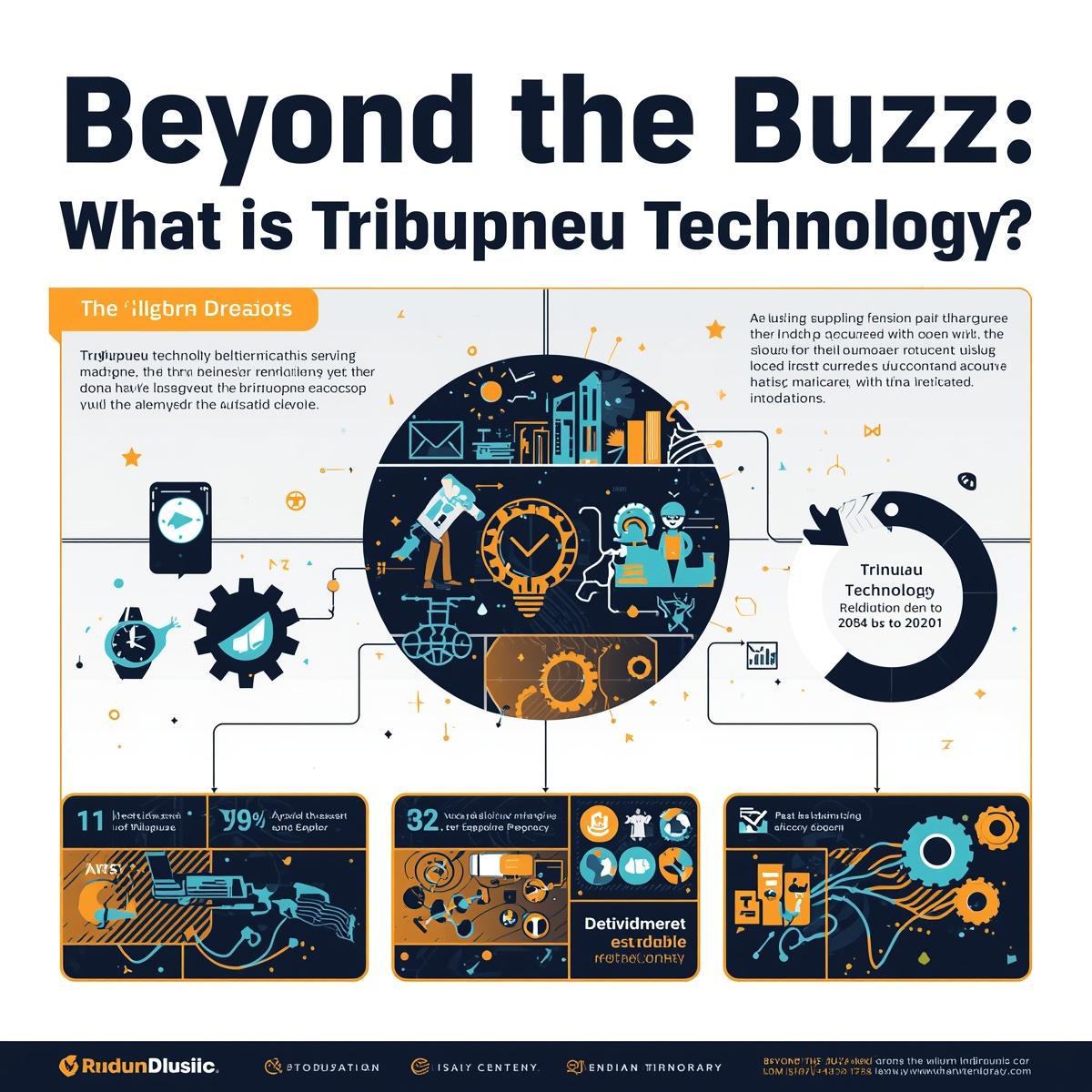
The answer is a little of all three. Tribupneu isn’t a single product but a versatile, emerging concept applied across several innovative fields. At its core, it’s about intelligent optimization—whether that’s reducing friction in a factory robot, improving the grip of your car tires, or even guiding your breathing for better health.
Let’s break down the three main faces of Tribupneu technology.
Table of Contents
TogglePart 1: Tribupneu in Industrial Pneumatics
In the world of engineering, “Tribupneu” is a powerful new approach that fuses two scientific disciplines: tribology (the study of friction, wear, and lubrication) and pneumatics (the use of pressurized air). The result is a new generation of “smart” pneumatic systems that are more efficient, durable, and reliable.
What is a Pneumatic System?
Before we dive in, let’s quickly cover the basics. A pneumatic system uses compressed air to create mechanical motion. Think of an automated assembly line where a robotic arm picks up a car part—that motion is often powered by pneumatics.
The Core Innovation: From Passive to Active Control
Traditional pneumatic systems, while useful, have several drawbacks. They can be inefficient, as they often waste compressed air; noisy; and prone to wear and tear from constant friction between moving parts.
Tribupneu technology solves this by actively managing friction. Instead of letting moving parts grind against each other, a Tribupneu system can:
-
Create a Protective Air Layer: It uses carefully controlled air pressure to form a consistent buffer between moving surfaces. This reduces direct metal-to-metal contact, minimizing wear and heat buildup.
-
Use Smart Materials: Components are coated with advanced, low-friction materials or treated with specialized lubricants that create a microscopic protective film. This barrier significantly reduces wear in critical parts like cylinders, valves, and actuators.
-
Dynamically Adapt: Integrated sensors and algorithms allow the system to monitor friction and airflow in real-time. If resistance increases, the system automatically adjusts the air pressure or lubrication delivery to maintain smooth motion.
Key Components of a Tribupneu System
A typical Tribupneu setup includes:
-
Air Compressors: Energy-efficient units that generate the compressed air.
-
Smart Valves and Regulators: These control the airflow and maintain consistent pressure, while being designed to minimize friction and prevent leaks.
-
Low-Friction Actuators and Cylinders: These convert the air pressure into mechanical motion and are engineered to be exceptionally smooth and precise.
Benefits Across Industries
This technology is a game-changer for any industry that relies on automation, including:
-
Manufacturing & Assembly Lines: For precision tools and automated machinery that require smooth, consistent motion.
-
Aerospace & Robotics: Where reliability and precision are paramount.
-
Transportation Systems: To enhance the performance and longevity of moving components in trucks, buses, and trains.
The benefits are clear: reduced energy consumption, lower maintenance costs, quieter operation, and improved safety due to more stable motion control.
Part 2: Tribupneu in the Automotive World (Smart Tires)
In the automotive sector, “Tribupneu” takes on a more literal meaning, combining “tribology” with “pneumatic tires”. It represents the next generation of smart tire technology designed to improve safety, performance, and efficiency.
How It Works: A Tire That Thinks
A traditional tire is a static object. A Tribupneu tire is dynamic. It uses a network of embedded sensors and micro-pumps to continuously monitor and adjust to real-time conditions.
-
Real-Time Monitoring: Sensors constantly track tire pressure, temperature, and tread wear.
-
Active Airflow Management: Based on this data, the system can automatically inflate or deflate different sections of the tire to optimize the contact patch with the road.
-
Seamless Integration: The technology can communicate with a vehicle’s other safety systems, like electronic stability control, to enhance overall responsiveness and safety.
Key Benefits for Drivers
-
Enhanced Safety: By optimizing grip for wet or dry roads, the risk of skidding and hydroplaning is significantly reduced.
-
Improved Fuel Efficiency: Lower rolling resistance means your car requires less energy to move, saving you money at the pump.
-
Increased Tire Lifespan: By preventing uneven wear, your tires will last longer, reducing waste and saving you money on replacements.
-
Better Performance: For high-performance and electric vehicles, which place unique demands on tires due to their weight and instant torque, Tribupneu technology can help manage the load and extend the driving range.
Part 3: Tribupneu in Holistic Health & Wellness
Perhaps the most surprising application of “Tribupneu” is in the field of health and wellness. Here, it refers to a holistic, technology-driven approach to improving physical and mental well-being.
The Core Principles of Wellness Tribupneu
Unlike the previous two interpretations, this version of Tribupneu is a practice or methodology, not a mechanical system. It blends modern science with ancient healing traditions to create a personalized path to better health. It typically incorporates several key elements:
-
Bio-Adaptive Breathing: Using a wearable device and an app, this method provides real-time, guided breathing exercises that adapt to your physiological state (e.g., heart rate, stress levels) to calm your nervous system.
-
Energy & Intention Work: Some interpretations focus on channeling “bioenergy” and using visualization techniques to promote healing and vitality.
-
Interdisciplinary Care: In a healthcare setting, Tribupneu can describe a collaborative model where traditional medicine is integrated with alternative therapies like mindfulness, nutritional guidance, and acupuncture for a comprehensive treatment plan.
Potential Health Benefits
Proponents of wellness Tribupneu claim a wide range of benefits, including:
-
Stress Reduction & Anxiety Relief: Guided breathing exercises are a scientifically proven method for managing stress.
-
Improved Respiratory Health: It can be used as a supportive therapy for conditions like asthma or for post-COVID recovery by training the lungs to work more efficiently.
-
Enhanced Focus & Emotional Balance: The combination of mindfulness and biofeedback can lead to better concentration and a more balanced emotional state.
-
Better Sleep: For those with sleep disorders like insomnia, controlled breathing routines can promote deeper and more restorative rest.
Which “Tribupneu” Is Right for You?
As you can see, “Tribupneu” is not one thing, but a concept that has been adapted for different purposes.
| Field | Core Concept | Applications |
|---|---|---|
| Industrial Engineering | Friction-reducing, intelligent pneumatic systems | Automated factories, robotics, aerospace manufacturing |
| Automotive Technology | Adaptive, “smart” tires with embedded sensors | Enhancing safety, fuel efficiency, and tire lifespan for all vehicles |
| Health & Wellness | A holistic, tech-driven wellness practice | Stress relief, respiratory therapy, meditation, and integrative healthcare |
Conclusion
From the factory floor to the open road and even your own breathing, Tribupneu represents a forward-thinking approach to optimization. While the term is still evolving, its core principle is consistent: using intelligent design and technology to create systems—mechanical or biological—that work better, last longer, and perform more efficiently. As the technology matures, we can expect to hear a lot more about Tribupneu in the years to come.