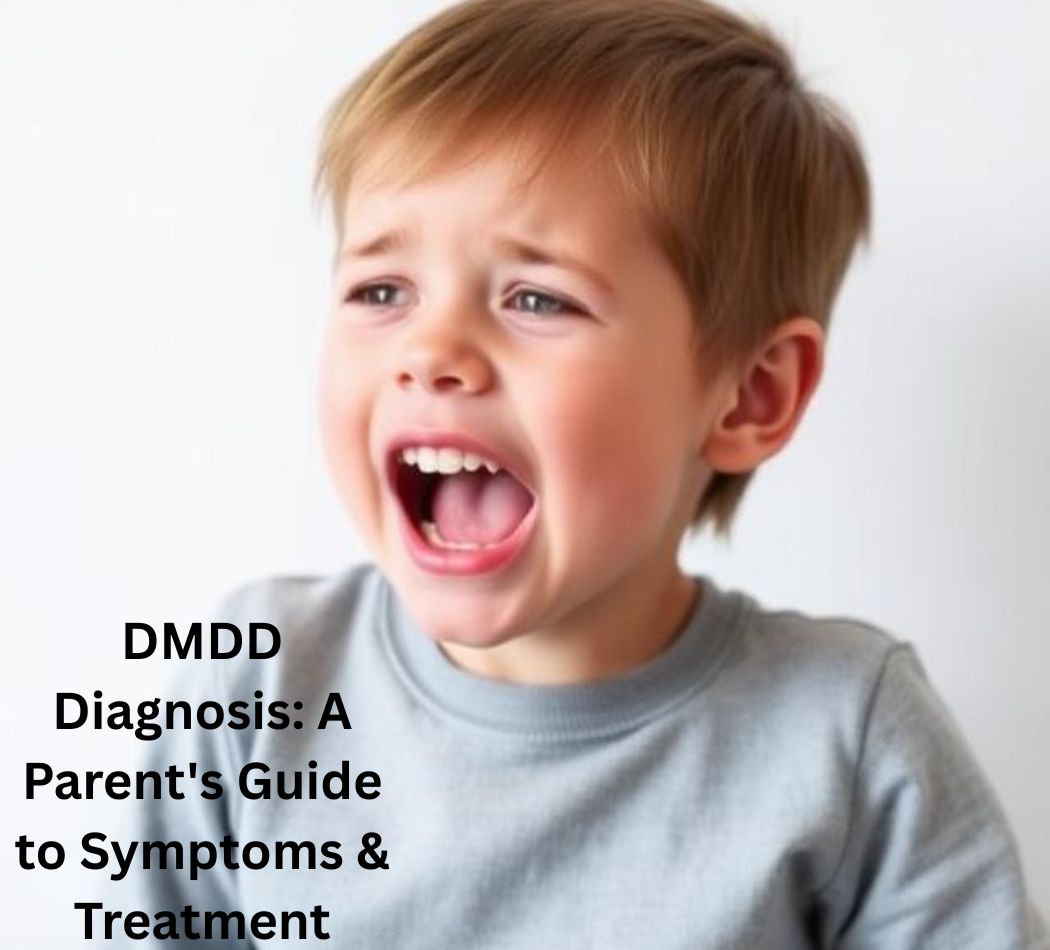
Imagine a child who wakes up angry. Not just grumpy, but deeply, profoundly irritable. A simple request like “please put on your shoes” can trigger a volcanic, 40-minute tantrum that involves screaming, throwing objects, and physical aggression. This isn’t a “bad day.” This is a daily reality.
This is the world of a child with Disruptive Mood Dysregulation Disorder (DMDD). For parents, it feels like walking on eggshells, constantly bracing for the next explosion. For the child, it’s a life of feeling out of control and unable to cope with emotions that feel too big for their body.
Introduced in the DSM-5 in 2013, DMDD was created to accurately diagnose children with chronic, severe irritability—a group previously often misdiagnosed with pediatric bipolar disorder. If you have been asking, “Is this normal? Is it ADHD? Is it bipolar?”—this guide is for you. Let’s demystify the DMDD diagnosis.
Table of Contents
ToggleUnderstanding DMDD: More Than Just Tantrums
To diagnose DMDD, a mental health professional looks for a specific, severe pattern of behavior that goes far beyond the typical emotional ups and downs of childhood.
What Are the Core Symptoms?
According to the National Institute of Mental Health and the DSM-5 criteria, a DMDD diagnosis hinges on three core pillars :
-
Severe Temper Outbursts: These are verbal (e.g., yelling, screaming) or behavioral (e.g., physical aggression toward people or property) rages that are grossly out of proportion to the situation. They are inconsistent with the child’s developmental level.
-
Chronic Irritability: Between outbursts, the child’s mood is persistently irritable or angry most of the day, nearly every day. This is observable by others, like parents and teachers.
-
Frequency and Duration: The outbursts occur, on average, three or more times per week. These symptoms must have been present for 12 or more months without a period of 3 or more consecutive months without symptoms.
The “Rule-Outs”: Age and Settings
A DMDD diagnosis also has specific parameters. Symptoms must be present in at least two settings (e.g., at home, at school, with peers) and severe in at least one. The diagnosis cannot be made before age 6 or after age 18, and the onset of symptoms must be before age 10.
The DMDD Diagnosis Journey: How Is It Identified?
Getting a DMDD diagnosis is not a simple blood test. It is a comprehensive evaluation by a qualified mental health professional, such as a child psychiatrist or psychologist.
The Assessment Process
-
Clinical Interview: The clinician will conduct extensive interviews with the child and their parents or caregivers. They will ask detailed questions about the child’s behavior, the frequency and intensity of outbursts, and the child’s baseline mood between episodes.
-
Gathering History: They will seek information from multiple sources, including teachers and other family members, to confirm the symptoms are present in different environments.
-
Using Assessment Tools: Clinicians often use behavior and emotion rating scales or checklists to help quantify the severity of symptoms .
-
Ruling Out Other Conditions: A crucial part of the diagnosis is distinguishing DMDD from other disorders. The clinician must rule out the possibility that the behaviors are better explained by another mental disorder, a substance, or a neurological condition .
The Great Debate: DMDD vs. Bipolar Disorder vs. ADHD
One of the biggest challenges in getting an accurate DMDD diagnosis is differentiating it from other conditions, particularly Pediatric Bipolar Disorder (PBD) and ADHD. Understanding the key differences is essential for effective treatment.
| Feature | Disruptive Mood Dysregulation Disorder (DMDD) | Pediatric Bipolar Disorder (PBD) | ADHD |
|---|---|---|---|
| Mood Pattern | Chronic, non-episodic irritability. The child is almost always irritable. | Episodic mood shifts. Distinct episodes of mania/hypomania and depression lasting days or weeks. | May have mood lability, but it’s often linked to frustration, not a distinct episode. |
| Key Symptoms | Severe, frequent temper outbursts (≥3x/week) plus persistent irritability between them. | Grandiosity, decreased need for sleep, rapid pressured speech, risky behavior during manic episodes . | Primarily inattention, hyperactivity, and impulsivity. |
| Prognosis | More likely to develop unipolar depression or anxiety disorders in adulthood. | Risk of recurrent manic and depressive episodes throughout life. | May persist into adulthood but often improves with treatment and age. |
Treating DMDD: A Path Forward
A DMDD diagnosis, while heavy, is not a life sentence. It is the first and most crucial step toward getting the right help. In 2024, an expert consensus highlighted the importance of a multi-pronged approach to treatment.
1. First-Line: Psychosocial Interventions
The strongest consensus for treating DMDD focuses on non-pharmacological, behavioral, and systemic therapies. These are often the primary strategies.
-
Parent Management Training (PMT): This teaches parents effective strategies to set limits, reinforce positive behavior, and manage outbursts without escalating conflict.
-
Cognitive Behavioral Therapy (CBT) & Dialectical Behavior Therapy (DBT): These help children identify emotional triggers, learn emotional regulation skills, and cope with distress without resorting to rage .
-
Parent-Child Interaction Therapy (PCIT): A therapeutic approach focusing on improving the parent-child relationship and interaction patterns.
2. The Role of Medication
There are no FDA-approved medications specifically for DMDD. The use of medication is often considered when comorbidities exist (like severe ADHD) or when psychosocial interventions are ineffective. In severe cases, atypical antipsychotics may be considered, but always with careful monitoring for side effects.
Practical Tips for Parents Navigating a DMDD Diagnosis
-
Find the Right Professional: Seek out a child and adolescent psychiatrist or psychologist with experience diagnosing and treating DMDD.
-
Be the Historian: Keep a log of your child’s outbursts, noting the trigger, time, intensity, and duration. This data is invaluable for your clinician.
-
Communicate with School: Work with your child’s school to ensure they understand the diagnosis and can provide appropriate support and accommodations.
-
Prioritize Self-Care: Parenting a child with DMDD is exhausting. You cannot pour from an empty cup. Seek support groups and prioritize your own mental health.
Conclusion: A Brighter Future Starts with Understanding
Receiving a DMDD diagnosis can be a turning point. For years, families may have felt lost, blaming themselves or their child. The diagnosis provides a framework for understanding the behavior—not as a moral failing, but as a treatable condition.
Key Takeaways
-
DMDD is a distinct diagnosis for children with chronic, severe irritability and frequent temper outbursts, often misdiagnosed as bipolar disorder.
-
Diagnosis is a clinical process involving interviews with parents and teachers, ruling out other conditions like bipolar disorder and ADHD.
-
The core of the condition is persistent, non-episodic irritability, not the mood swings typical of bipolar disorder .
-
Effective treatment exists, with psychosocial therapies (like Parent Management Training and CBT) as the first line of defense.
-
Medication may play a role, but it is typically reserved for severe cases or when comorbidities like ADHD are present, with a focus on safety .
The journey through a DMDD diagnosis is challenging, but it is a path toward understanding and, ultimately, healing for the entire family. With the right support, children with DMDD can learn to manage their emotions and lead fulfilling lives.
Detailed FAQs
1. At what age can a DMDD diagnosis be made?
The diagnosis can be made between the ages of 6 and 18. The child must have exhibited symptoms before age 10.
2. Can a child have both DMDD and ADHD?
Yes, DMDD commonly co-occurs with ADHD. In fact, when a child has both, the treatment of ADHD symptoms (often with stimulants) can sometimes help reduce the irritability seen in DMDD.
3. How do I know if my child has DMDD or just a bad temper?
The key difference is the chronicity and severity. A child with a bad temper is generally happy between outbursts. A child with DMDD is chronically irritable, most of the day, nearly every day, for at least a year. Their outbursts are also much more frequent and intense than what is typical for their age.
4. Is DMDD a form of bipolar disorder?
No, they are distinct disorders. While DMDD involves severe irritability, it lacks the episodic, distinct manic or hypomanic episodes (such as grandiosity, decreased need for sleep, or flight of ideas) that define bipolar disorder. Children with DMDD are more likely to develop anxiety or depression later in life, not bipolar disorder.
Sources
-
National Institute of Mental Health (NIMH). “Disruptive Mood Dysregulation Disorder: The Basics.”
-
Native American SmartCare. “Differentiating Pediatric Bipolar Disorder, ADHD & Disruptive Mood Dysregulation Disorder: A Clinical Perspective.”
-
Boudjerida, A., et al. “A Delphi consensus among experts on assessment and treatment of disruptive mood dysregulation disorder.” Frontiers in Psychiatry, 2024.
-
Yale Medicine. “Disruptive Mood Dysregulation Disorder.”
-
American Psychiatric Association. Diagnostic and Statistical Manual of Mental Disorders (5th ed.). 2013.
-
Orsolini, L., et al. “An expert opinion on the pharmacological interventions for Disruptive Mood Dysregulation Disorder (DMDD).” Expert Opinion on Pharmacotherapy, 2024.
-
MDedge. “When is it bipolar disorder and when is it DMDD?”