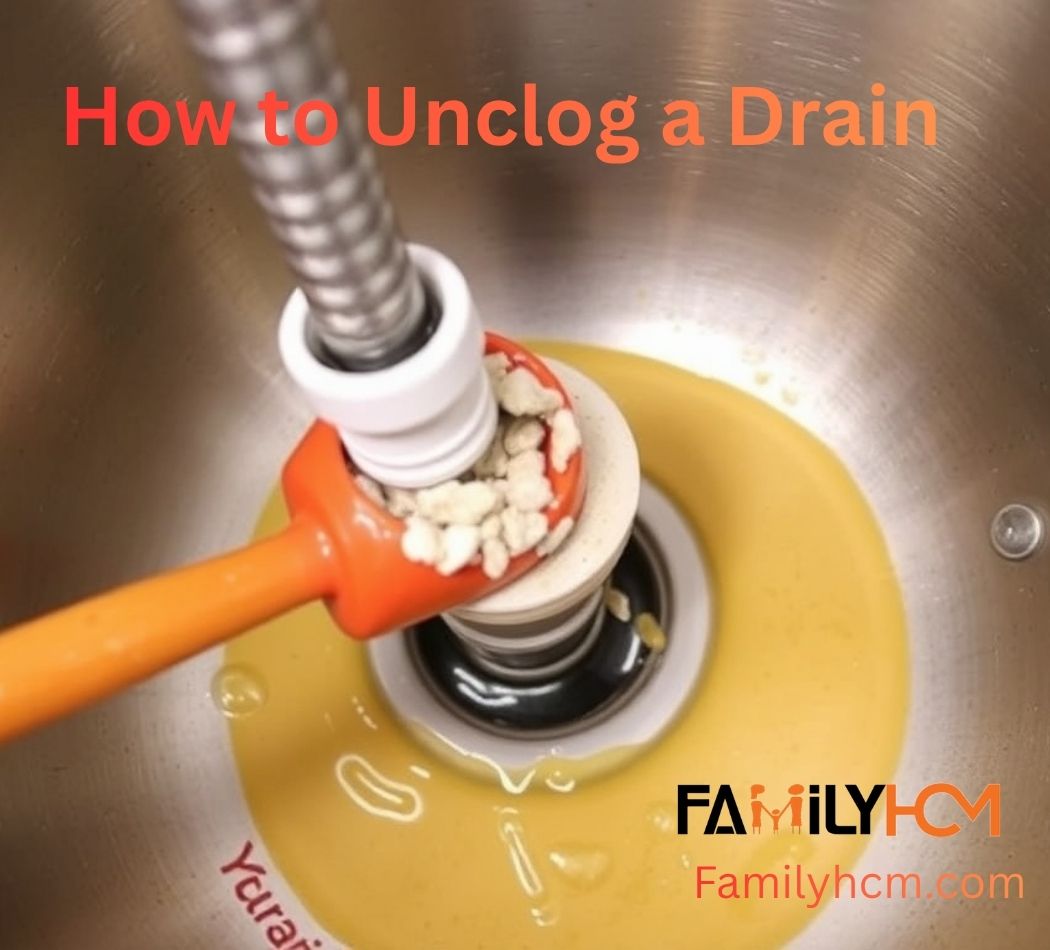
How to Unclog a Drain: Few things ruin a morning routine faster than standing in three inches of soapy water while you shower. A clogged drain is inconvenient, unsanitary, and—if ignored—can lead to expensive plumbing bills.
But before you reach for a harsh chemical cleaner or call a professional, try these 5 proven methods. Most clogs can be cleared in under 15 minutes using items you already own.
Let’s dive in.
What Causes a Clogged Drain? (And Why It Keeps Coming Back)
To unclog a drain effectively, you need to know what you’re fighting.
-
Bathroom sinks & showers: Hair, soap scum, toothpaste, and shaving cream residue.
-
Kitchen sinks: Grease, food particles, coffee grounds, and cooking oil.
-
Utility drains: Dirt, lint, and mineral buildup.
Pro tip: Never pour cooking grease down the sink. It cools and hardens inside pipes, creating a stubborn “fatberg” over time.
What You’ll Need (Most is Already in Your Kitchen)
You don’t need expensive tools for basic drain cleaning. Here’s your starter kit:
-
Kettle or large pot
-
Baking soda (1/2 cup)
-
White vinegar (1 cup)
-
Plunger (cup plunger for sinks, flange plunger for toilets)
-
Drain snake or zip-it tool
-
Rubber gloves
-
Bucket
Method 1: Boiling Water – The First Line of Defense
Best for: Mild clogs caused by grease or soap.
This is the simplest method—but only for metal pipes. (PVC pipes can warp under extreme heat.)
-
Bring a full kettle or large pot of water to a rolling boil.
-
Pour the hot water directly down the drain in a slow, steady stream.
-
Wait 5 minutes, then run hot tap water to check flow.
If water drains normally, you’re done. If not, move to Method 2.
Method 2: Baking Soda + Vinegar – The Natural Power Couple
Best for: Organic buildup (food, soap scum, mild hair clogs).
This chemical reaction creates fizzing that dislodges soft clogs without damaging pipes.
-
Remove standing water from the sink or tub.
-
Pour 1/2 cup of baking soda directly into the drain.
-
Immediately follow with 1 cup of white vinegar.
-
Cover the drain opening with a wet cloth or stopper.
-
Wait 10–15 minutes (listen for fizzing and popping).
-
Flush with boiling water (or hot tap water if using PVC).
Note: This is excellent for deodorizing, but won’t break through solid hair clogs or tree roots.
Method 3: The Trusty Plunger – Not Just for Toilets
Best for: Dense clogs that water can’t push through.
Most people use plungers incorrectly. Here’s the right way:
-
Fill the sink or tub with enough water to cover the plunger’s rubber cup.
-
Place the plunger over the drain, creating a tight seal.
-
Pump vigorously up and down 10–15 times without breaking the seal.
-
Quickly pull the plunger up. The suction often dislodges the clog.
-
Repeat 2–3 times, then run water to test.
Pro tip: For double kitchen sinks, seal the second drain with a wet rag while plunging the first. Otherwise, you’re just pushing air between sinks.
Method 4: Drain Snake or Zip-It Tool – For Stubborn Hair Clogs
Best for: Bathroom drains clogged with hair and congealed soap.
A drain snake (or a $5 plastic zip-it tool) physically pulls out the clog. This is the most effective method for hair.
-
Push the snake or zip-it tool into the drain until you feel resistance.
-
Twist, hook, and pull upward slowly.
-
Remove the nasty hair “mop” (wear gloves!).
-
Dispose of debris, then flush with hot water.
When to use an auger: If the clog is deeper than 12–18 inches, rent a hand-crank auger from a hardware store.
Method 5: Disassemble the P-Trap – Last Resort Before Calling a Plumber
Best for: Recurring clogs or clogs that nothing else fixes.
The P-trap is the curved pipe under your sink. It’s designed to catch debris.
-
Place a bucket underneath the P-trap.
-
Unscrew the slip nuts by hand (use pliers gently if stuck).
-
Remove the trap and clean out sludge, lost jewelry, or hardened gunk.
-
Reassemble and run water to check for leaks.
Warning: If your home is older than 1990, pipes may be corroded. Go slowly or call a professional.
What About Chemical Drain Cleaners? (Read This First)
Commercial drain cleaners (Drano, Liquid-Plumr) seem convenient, but here’s why most plumbers hate them:
-
They generate heat that can crack old PVC or metal pipes.
-
Toxic fumes are dangerous in poorly ventilated spaces.
-
They rarely dissolve hair or solid debris—only soft organic matter.
-
Leftover chemicals can burn your skin or eyes if they splash back.
Our advice: Reserve chemicals as an absolute last resort, and never mix different brands.
When to Call a Professional Plumber
DIY methods work for 80% of household clogs. Call a plumber if:
-
Water backs up in multiple fixtures (toilet + shower + sink).
-
You hear gurgling sounds from other drains.
-
A drain snake hits something solid but won’t pass through.
-
You’ve tried all 5 methods and water still drains slowly.
-
You suspect a main sewer line clog or tree root intrusion.
How to Prevent Future Clogs (5 Easy Habits)
An ounce of prevention saves a $300 plumber visit.
-
Use drain strainers in every sink, shower, and tub. Clean them weekly.
-
Never pour grease or oil down the drain – wipe pans with paper towels first.
-
Flush drains weekly with boiling water (for metal pipes only).
-
Run cold water for 15 seconds after using the garbage disposal to solidify and chop any grease.
-
Do a monthly baking soda/vinegar flush to keep odors and light buildup away.
Quick Reference: Which Method Should You Try First?
| If your drain is… | Start with this method |
|---|---|
| Slow, but not fully blocked | Boiling water → Baking soda + vinegar |
| Fully blocked with standing water | Plunger → Drain snake |
| Smelly but draining | Baking soda + vinegar |
| Full of visible hair | Zip-it tool or drain snake |
| Clogged deep in the pipes | Disassemble P-trap or call a plumber |
Final Thoughts: How to Unclog a Drain
Learning how to unclog a drain yourself saves time, money, and unnecessary frustration. Start with the gentlest method (boiling water) and work your way up. In most cases, a plunger or a $5 zip-it tool solves the problem in under 10 minutes.
And remember: If water is backing up into multiple drains or you smell sewage, stop DIY attempts and call a licensed plumber immediately.
Got a drain horror story? Drop it in the comments below. We read every one.