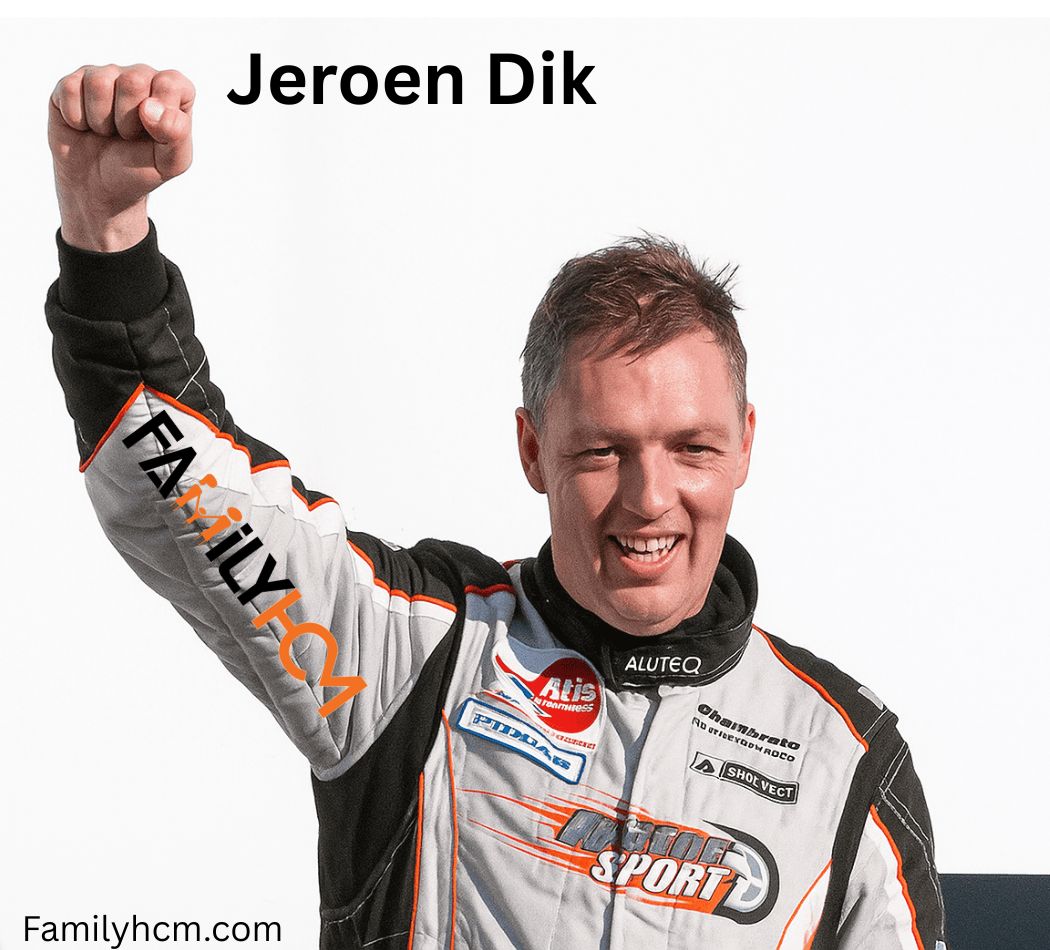
In the contemporary art world, few figures embody the spirit of interdisciplinary creativity quite like Jeroen Dik. Hailing from the Netherlands, Dik has carved out a distinctive niche that defies easy categorization—his work sits at the intersection of traditional artistic techniques, modern technology, and surprisingly, automotive engineering. This unique fusion has made him one of the most intriguing creative forces to emerge from the Dutch art scene in recent years.
Early Life and Formative Years
Jeroen Dik was born in The Hague, a Dutch city renowned for its rich cultural heritage and vibrant arts scene. Growing up surrounded by world-class museums and galleries, Dik developed an early appreciation for creative expression. However, unlike many artists whose paths are singular from the start, Dik displayed a dual fascination from childhood—one foot in the world of aesthetics and the other in the realm of mechanics and technology.
This duality would come to define his entire career. His formal education reflected this split commitment: he studied at the prestigious Royal Academy of Art (KABK), where he honed his practical skills in traditional craftsmanship, and later attended Utrecht University to study Art History, grounding his creative instincts in academic theory. This combination of hands-on training and scholarly insight provided the foundation for his later multidisciplinary approach.
The Two Sides of a Creative Force
What makes Jeroen Dik truly unique is his parallel career trajectory. While he has gained recognition as a contemporary artist, he has simultaneously built a reputation in the automotive engineering world through his company, JDEngineering. In this sphere, Dik focuses on engine tuning, particularly for the 2.0 TSI platform using Simos19 control units—work that requires extreme technical precision and a deep understanding of complex mechanical systems.
This automotive expertise isn’t merely a separate career; it directly influences his artistic practice. Dik often incorporates automotive parts, industrial materials, and engineering concepts into his artwork, creating pieces that function as dialogues between the mechanical and the organic, the functional and the expressive. For him, the precision required to tune an engine and the sensitivity needed to create art are not opposing forces but complementary approaches to understanding and shaping the world.
Artistic Evolution and Style
Dik’s artistic journey has been marked by constant evolution. Early in his career, he worked within traditional frameworks, focusing on realism and meticulous detail in his paintings and sculptures. But as his practice matured, he began pushing boundaries, experimenting with abstraction, mixed media, and eventually digital technologies.
Today, his artistic style involves an innovative blend of abstract and figurative elements, characterized by vibrant colors and immersive atmospheres. He employs layering techniques and mixed media to add texture and depth to his work, often incorporating unconventional materials like resin, metal, and digital elements. This tactile quality makes his pieces engaging on multiple sensory levels, inviting viewers to experience them physically as well as visually.
Light and shadow play crucial roles in his compositions, helping build complex narratives that unfold as viewers move around or through his installation. This spatial awareness reflects his engineering background—an understanding of how objects exist in and interact with three-dimensional space.
Embracing Technology and Innovation
Perhaps the most distinctive aspect of Jeroen Dik’s practice is his embrace of cutting-edge technology. He has become known for integrating digital tools, augmented reality (AR), and even artificial intelligence into his creative process.
His breakthrough project, “The Conscience Machine,” exemplifies this approach. This interactive installation invites viewers to engage with questions of morality and decision-making through a network of sensors that responds to their movements and choices. As participants navigate the space, they generate visual imagery that reflects their individual consciousness, becoming active participants in the artwork rather than passive observers.
Dik also uses 3D modeling software to visualize concepts before execution and employs advanced printing technologies to experiment with textures and forms previously impossible to achieve. Augmented reality features in some of his works transform how audiences interact with his art, allowing them to step into layers of meaning that exist beyond the physical object.
This integration of technology isn’t merely gimmicky—it serves a deeper purpose. Dik uses these tools to explore contemporary philosophical questions about the relationship between humanity and technology, the nature of consciousness, and the boundaries between physical and virtual experience.
Themes and Messages
Across his body of work, several recurring themes emerge. Nature and its relationship to human intervention feature prominently—Dik frequently addresses environmental concerns, using his art to spark conversations about sustainability and our responsibility toward the natural world.
Identity and cultural narratives also play important roles. His pieces often reflect personal experiences while simultaneously addressing broader societal issues, creating a dialogue between individual and collective meaning. The juxtaposition of chaos and order, a theme that might be expected from someone equally comfortable in the creative and technical realms, appears throughout his work, inviting reflection on the complexities of modern life.
Some critics have noted that Dik’s work challenges viewers to reconsider fundamental assumptions about art itself. By blurring boundaries between painting and sculpture, between physical and digital, between creator and audience, he pushes the definition of what art can be and do in the 21st century.
Recognition and Impact: Jeroen Dik
Dik’s innovative approach has earned him significant recognition. His work has been featured in prestigious galleries across Europe, and he has received numerous awards, including the Young Artist Award at the International Art Fair. Major publications have covered his work, and his exhibitions have drawn attention from critics and collectors worldwide.
His influence extends beyond traditional art circles. In the automotive world, his reputation as an engine-tuning expert has made him a respected figure, and his work has been featured in publications like Performance VW Magazine. His ability to navigate these different worlds has made him something of a “digital transformation catalyst” in the gallery space, encouraging institutions to think differently about how art is presented and experienced.
Collaborations and Community Engagement
Dik’s collaborative spirit has led to partnerships with other artists, musicians, and even technology firms. He has worked with avant-garde musicians to create immersive experiences combining soundscapes and visual art, and he has collaborated with scientists and engineers on projects exploring the intersection of art and technology.
Community engagement is also important to him. Dik has been involved in initiatives to support emerging artists and to bring art into community spaces. He believes in using art as a tool for social change and has worked with local organizations to address important issues through creative projects.
Controversies and Challenges
Like many boundary-pushing artists, Dik has faced criticism. Some art purists argue that his heavy use of technology and unconventional materials overshadows traditional craftsmanship, creating a disconnect with artistic heritage. Others have found certain pieces provocative or challenging, sparking debates about artistic freedom versus public sensibilities.
Dik has also faced practical challenges common to artists working across disciplines. Financial pressures, skepticism from traditionalists in both the art and engineering worlds, and the difficulty of funding ambitious projects have all been obstacles he has navigated. Rather than deterring him, these challenges seem to have reinforced his commitment to his unique vision.
Future Directions
Looking ahead, Jeroen Dik shows no signs of slowing down. Current exhibitions at venues like the Museum of Modern Art and the Amsterdam International Art Fair continue to showcase his evolving practice. Upcoming projects include a multimedia installation exploring the interaction between technology and human emotion, as well as collaborations with emerging artists from diverse backgrounds.
One particularly exciting venture involves incorporating sustainable practices into his work, including using recycled automotive parts in large-scale installations. He is also exploring interactive pieces that use augmented reality to explain the internal mechanics of tuned engines—a project that beautifully synthesizes his dual expertise in art and automotive engineering.
Legacy and Influence
Jeroen Dik represents something increasingly valuable in contemporary culture: the ability to move fluidly between disciplines, to find connections between seemingly disparate fields, and to create work that speaks to both specialists and general audiences. His career demonstrates that technical precision and creative expression are not opposites but complementary approaches to understanding and shaping our world.
For emerging artists, Dik offers a model of fearless experimentation and interdisciplinary thinking. For the art world, his work challenges conventional boundaries and opens new possibilities for what art can be. And for anyone interested in the intersection of creativity and technology, his career provides a fascinating case study in how the two can enrich each other.
As Dik continues to push boundaries, one thing seems certain: his influence will be felt for years to come, not only in the galleries where his work hangs but in the broader conversation about how art can engage with the technological, environmental, and philosophical questions of our time.